

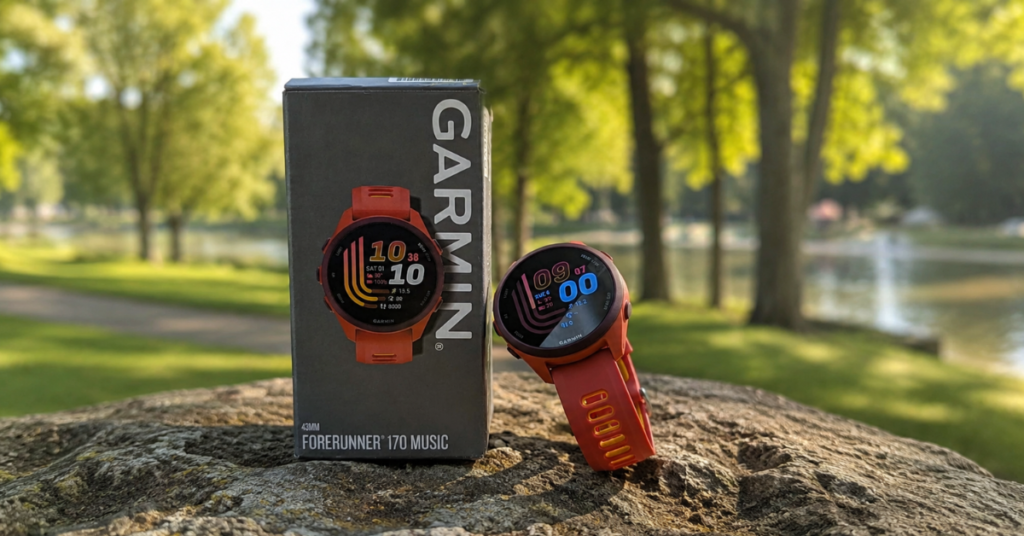
The Garmin Forerunner 170 is one of Garmin’s most important entry-level running watches because it brings a more complete training experience to runners who do not want to spend premium-watch money. It is light, comfortable, easy to use, and packed with enough running, recovery, and smart features to satisfy both first-time GPS watch buyers and runners upgrading from an older Garmin, Coros, or Apple Watch.
It is not perfect. The Forerunner 170 does not get Garmin’s latest heart rate sensor, it does not have dual-band GPS, and it is not a full triathlon watch. Battery life is also good rather than class-leading, especially if you use the AMOLED display in always-on mode. But as a complete running watch for daily training, 5K, 10K, half marathon, and marathon preparation, the Garmin Forerunner 170 is very easy to recommend.
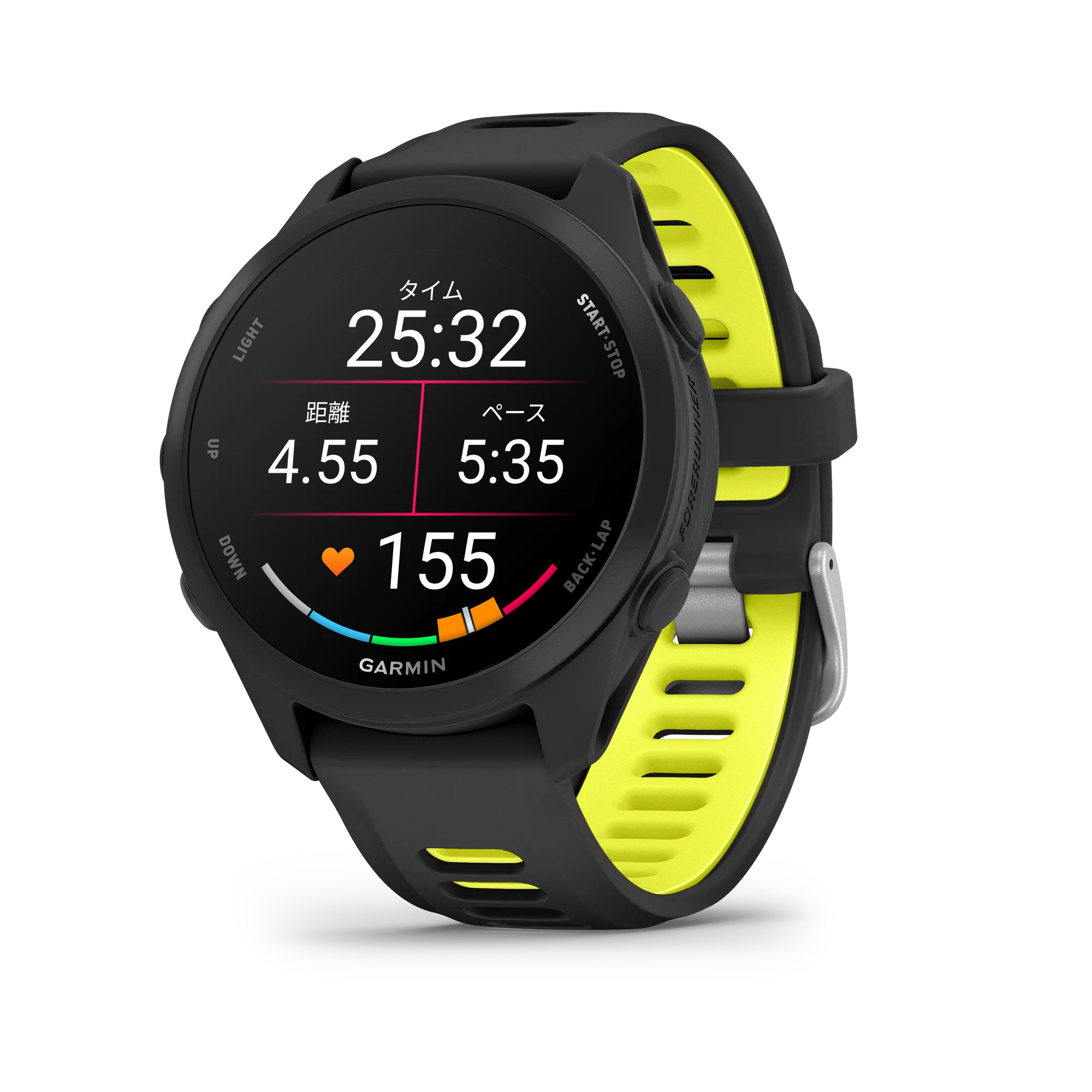
- Bright, vivid AMOLED display
- Rich running features, great value
- Garmin Pay supported
- Battery life not class-leading
- No dual-band GPS onboard
The Garmin Forerunner 170 is a capable running watch with excellent training guidance, strong battery life, and a bright AMOLED display. It succeeds the Forerunner 165 by bringing proper training analysis tools to the entry-level tier at an accessible price.
Best for:
Not ideal for:
What Is the Garmin Forerunner 170?
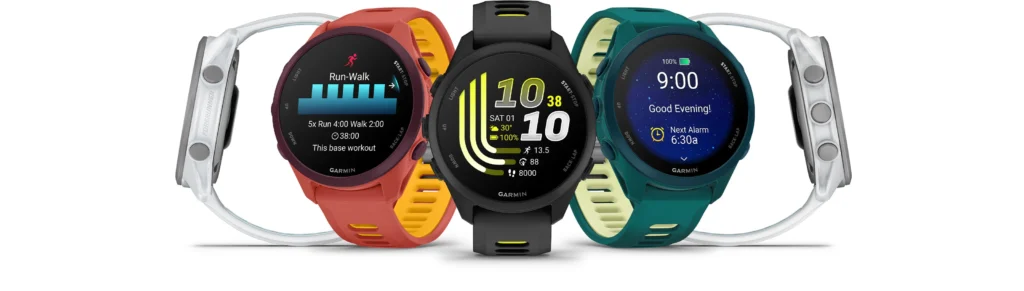
The Garmin Forerunner 170 is an affordable GPS running smartwatch positioned above the Forerunner 70 and as the natural successor to the Forerunner 165. It keeps the approachable size and AMOLED display that made Garmin’s newer entry-level watches more appealing, but adds more training analysis and smarter features for runners who want to understand their fitness, recovery, and training load in more detail.
In simple terms, this is not just a watch that tells you pace, distance, and heart rate. It is a watch that helps you train more intelligently. The Forerunner 170 gives you features such as training readiness, training status, training load, running dynamics, wrist-based running power, Garmin Coach plans, breadcrumb navigation, Garmin Pay, and, on the Music version, offline music support.
That combination makes it one of the most complete beginner-to-intermediate running watches in Garmin’s current lineup.
| Feature | Garmin Forerunner 170 |
|---|---|
| Display | 1.2-inch AMOLED touchscreen |
| Resolution | 390 × 390 pixels |
| Weight | Around 41g |
| Water resistance | 5 ATM |
| Battery life | Up to 10 days (smartwatch mode) |
| GPS battery | Up to 20 hours (all-systems GPS) |
| Music storage | Available on Forerunner 170 Music |
| Storage | 4 GB |
| Payments | Garmin Pay |
| Navigation | Breadcrumb with turn-by-turn guidance |
| GPS | All-systems GPS · No dual-band |
| Heart rate sensor | Garmin Elevate Gen 4 |
| Triathlon mode | Not available |
| External sensors | Bluetooth & ANT+ |
Design and Comfort
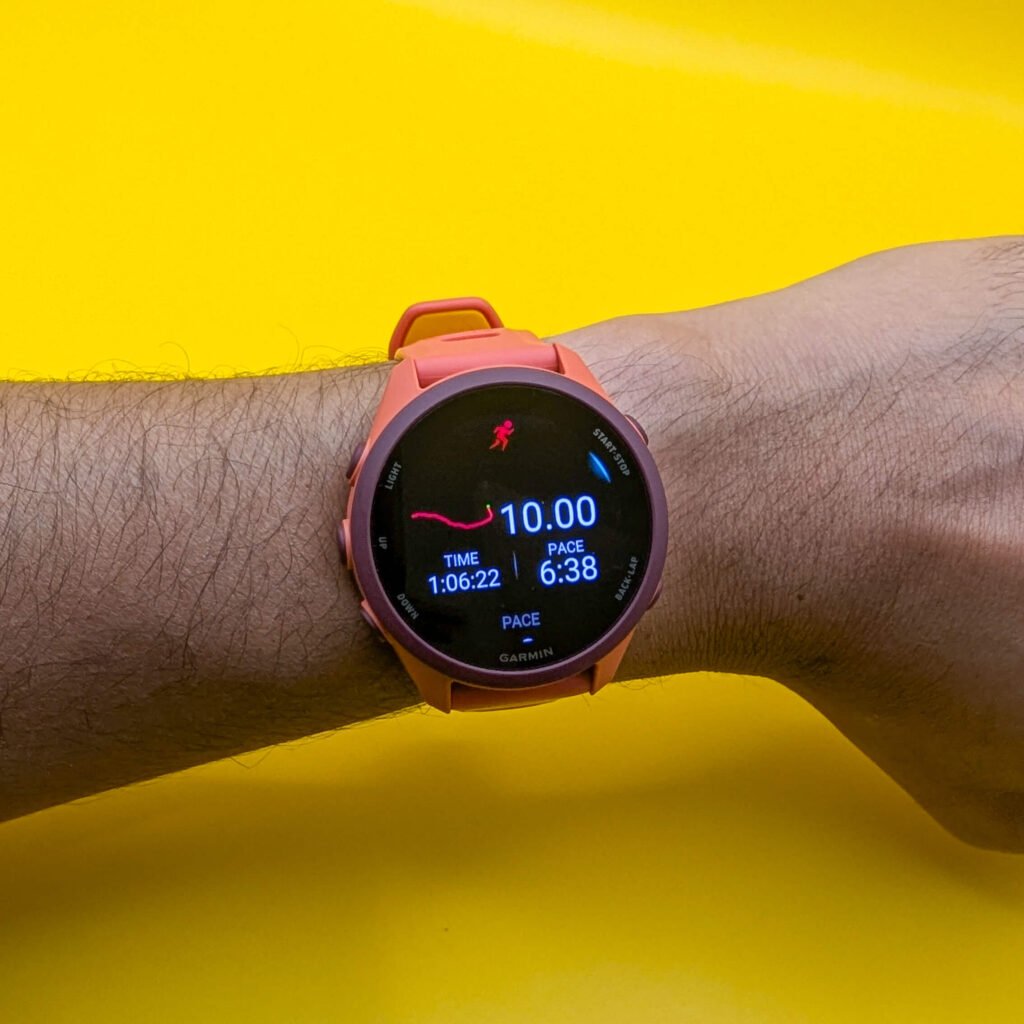
The Forerunner 170 has exactly the kind of design a running watch should have: light, slim, simple, and comfortable enough to wear all day and night.
At around 41g, it is not heavy on the wrist, and that matters more than many buyers realize. A running watch is not something you only wear for workouts. If you want accurate sleep, recovery, HRV, and training readiness data, you need to wear it consistently. That means comfort is a real performance feature.
The 42.6mm case size should work well for most wrists. It is not as bulky as Garmin’s premium outdoor watches, and it will be especially appealing to runners who find larger models like the Forerunner 965, Forerunner 970, Fenix, or Epix too big.
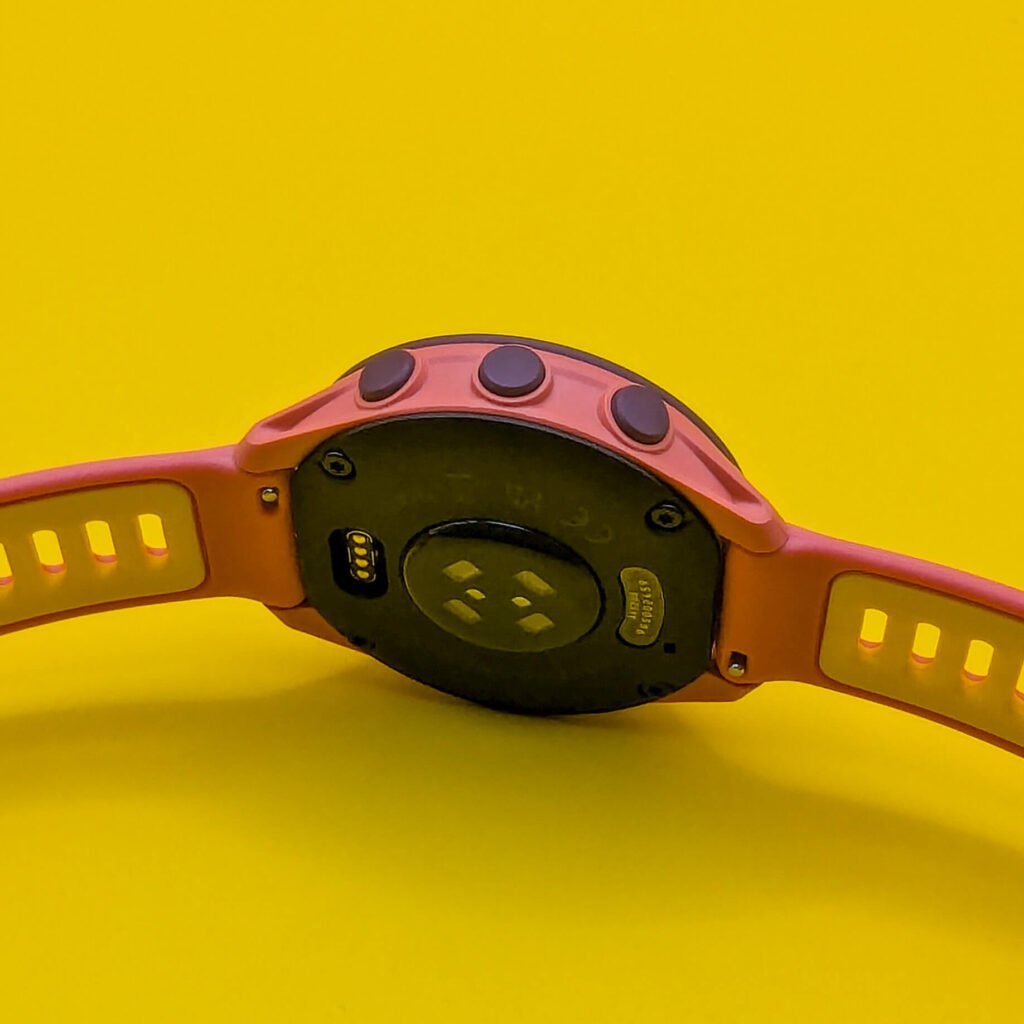
Garmin also keeps its classic five-button layout, which is still one of the best control systems for running. Touchscreens are useful during daily use, but buttons are better during workouts, especially when your hands are sweaty, you are wearing gloves, or you are running in rain.
The result is a watch that feels practical rather than flashy. It looks modern, but it still behaves like a proper sports watch.
Display Quality
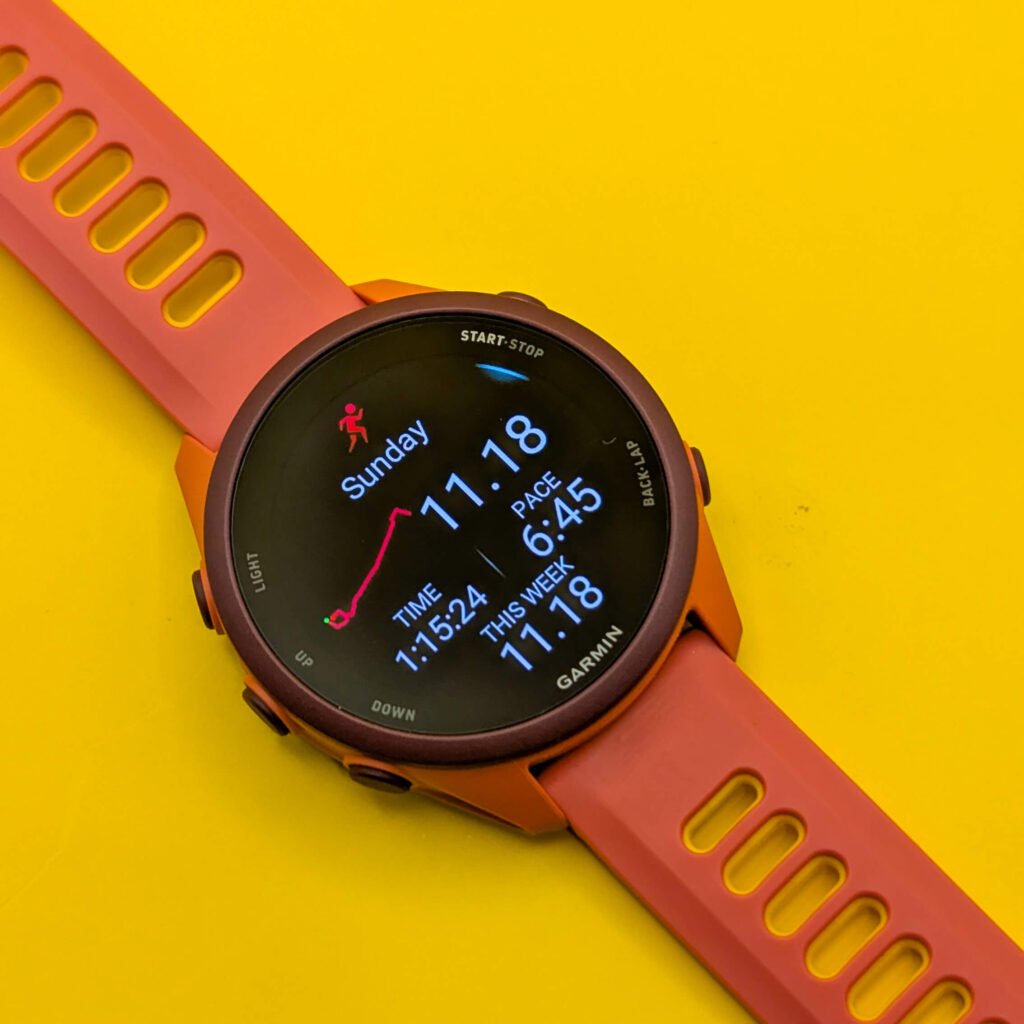
The 1.2-inch AMOLED display is one of the best reasons to consider the Forerunner 170 over older entry-level running watches. It is bright, sharp, and easy to read. The 390 x 390 resolution gives the watch a premium feel, and the screen is clear enough for workout data fields, daily widgets, notifications, and post-run summaries. For runners coming from older memory-in-pixel Garmin displays, the upgrade will feel significant. The Forerunner 170 looks more modern, and it is easier to read indoors, outdoors, and in low-light conditions.
The trade-off is battery life. AMOLED looks better, but it uses more power, especially if you use always-on display mode. If battery life matters more than display quality, there are other watches that last longer. But for most road runners training several times per week, the Forerunner 170 offers a good balance.
Running Features and Training Tools
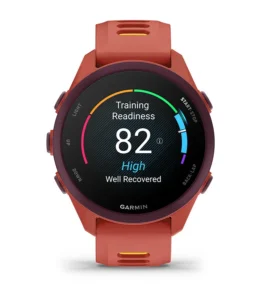
This is where the Garmin Forerunner 170 becomes more than a basic GPS watch.
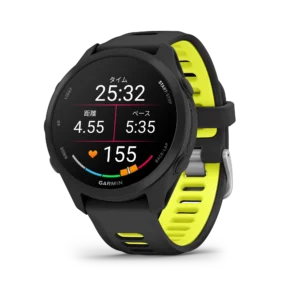
For beginners, it covers the essentials: pace, distance, time, heart rate, GPS tracking, lap pace, cadence, structured workouts, and Garmin Coach training plans.
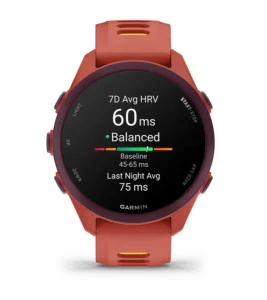
For improving runners, it adds more advanced tools: training readiness, training status, training load, HRV status, recovery insights, running power, running dynamics, and suggested workouts.
That is a strong package for a watch in this category.
The biggest benefit is that the Forerunner 170 helps you answer three important training questions:
- Am I training enough?
- Am I recovering properly?
- Am I ready to push today?
The addition of more advanced training analysis is also one of the main reasons to choose the Forerunner 170 over the older Forerunner 165 or the cheaper Forerunner 70.
GPS Accuracy
The Garmin Forerunner 170 does not have dual-band GPS. That is one of its biggest omissions, especially because some competing watches at similar prices now offer multi-band tracking. However, that does not mean the GPS performance is poor. For most road runs, park runs, and everyday training routes, all-systems GPS should be accurate enough. Review testing suggests the Forerunner 170 performs well in normal running conditions and can hold its own against more expensive watches in many scenarios.
Where dual-band GPS still matters is in difficult environments: dense city centers, tall buildings, heavy tree cover, twisty trails, and mountain routes. If you often run in those conditions, a watch like the Garmin Forerunner 265, Coros Pace 4, or a higher-end Garmin may be a better choice. For the average runner training on roads, pavements, parks, and open routes, the Forerunner 170’s GPS is good enough. But at this price, the absence of dual-band GPS is still a valid criticism.
Heart Rate Accuracy
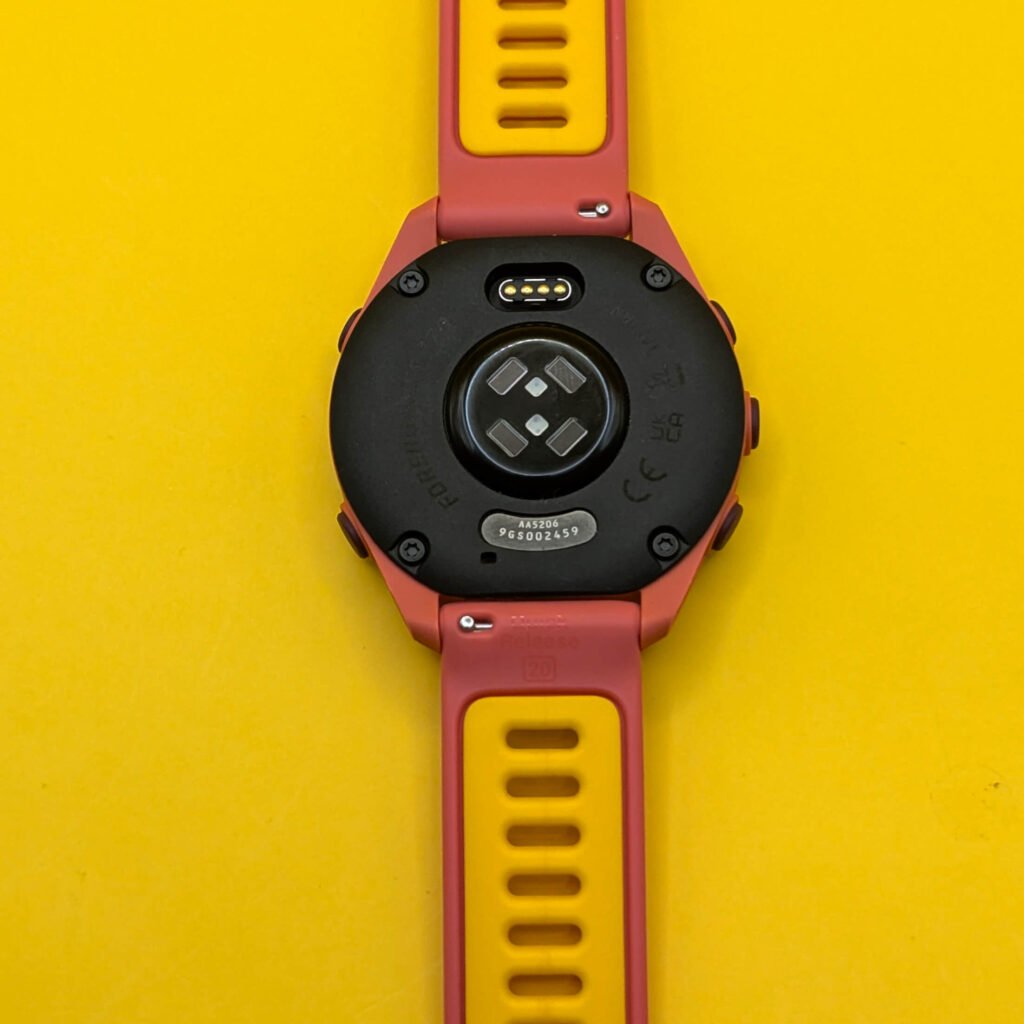
The Forerunner 170 uses Garmin’s Elevate Gen 4 optical heart rate sensor rather than the newer Elevate Gen 5 sensor found on higher-end Garmin watches. In steady runs, easy runs, long runs, and general fitness tracking, the heart rate data should be reliable for most users. But like most wrist-based optical sensors, it can lag during intervals, sudden pace changes, hill repeats, and high-intensity sessions.
For runners who train seriously by heart rate, the best setup is still to pair the watch with a chest strap or arm-based heart rate monitor. The good news is that the Forerunner 170 supports external sensors through Bluetooth and ANT+, which gives it more flexibility than many basic fitness watches.
So the heart rate performance is good, but not Garmin’s best.
Battery Life
Garmin claims up to 10 days in smartwatch mode and up to 20 hours in all-systems GPS mode. That is solid, but not class-leading.
In real-world use, battery life will depend heavily on your settings. If you use raise-to-wake display mode, you should get much better endurance. If you use always-on display, daily GPS workouts, notifications, sleep tracking, and music, you will need to charge more often. For most runners, this is not a major problem. You are still getting multiple days between charges, which is better than most lifestyle smartwatches. But compared with Coros and some older Garmin models, the Forerunner 170 is not the battery champion.
Battery verdict: good for daily training, average for its category, and not ideal for ultra-distance runners.
Smart Features
The Forerunner 170 is stronger than many budget sports watches when it comes to smart features. Garmin Pay is included, which is useful if your bank supports it. The Music version also adds offline music support, including compatibility with major streaming services such as Spotify, Deezer, and Amazon Music. That means you can run without carrying your phone, as long as you have Bluetooth headphones.
This is a major advantage over some Coros models, which may offer strong sports performance but fewer lifestyle features.
However, the Forerunner 170 is still not a true smartwatch in the Apple Watch sense. App support is limited, message interaction is more basic, and the overall smart experience is designed around fitness first.
Think of it as a running watch with smart features, not a smartwatch that also runs.
Navigation
The Forerunner 170 does not have full offline maps, but it does offer breadcrumb navigation with turn-by-turn guidance.
For most runners, that is enough. It can help you follow a planned route and avoid getting lost on unfamiliar roads or simple trails.
But if you regularly run in mountains, remote trails, or areas where detailed map context matters, you should consider a higher-end Garmin with proper mapping.
Navigation verdict: useful for everyday route following, but not built for serious outdoor navigation.
Garmin Forerunner 170 vs Garmin Forerunner 165
The Forerunner 165 remains a strong value option, especially if it is discounted. It has a similar AMOLED display and many of the core running features most people need.
The Forerunner 170 is better if you want improved training analysis, the newer interface, more sports modes, better overall feature depth, and a more complete long-term training experience. Choose the Forerunner 165 if price is your priority.
Choose the Forerunner 170 if training insights matter and you want the newer Garmin experience.
Garmin Forerunner 170 vs Garmin Forerunner 70
The Forerunner 70 is the simpler and cheaper watch. It is best for runners who mainly want GPS tracking, basic training support, and a lightweight Garmin experience.
The Forerunner 170 is the better watch for runners who want more sensors, better training metrics, Garmin Pay, music options, and more complete performance analysis.
Choose the Forerunner 70 if you want a simple first running watch.
Choose the Forerunner 170 if you are already serious about improving.
Garmin Forerunner 170 vs Garmin Forerunner 265
The Forerunner 265 is still a very strong alternative, especially if you find it on sale. It has dual-band GPS, triathlon support, and a more complete sports profile for multi-sport athletes.
The Forerunner 170 has the newer entry-level Garmin interface and a lower official price, but the Forerunner 265 may offer better value for more advanced runners and triathletes.
Choose the Forerunner 170 if you mainly run and want a newer, simpler Garmin.
Choose the Forerunner 265 if you want dual-band GPS, triathlon mode, and stronger performance features.
Garmin Forerunner 170 vs Coros Pace 4
The Coros Pace 4 is one of the strongest alternatives to the Forerunner 170. It offers excellent value, strong battery life, multi-band GPS, and triathlon support.
The Garmin Forerunner 170 fights back with Garmin’s ecosystem, better smart features, Garmin Pay, offline streaming music on the Music model, Garmin Coach, and a more polished lifestyle experience.
Choose the Coros Pace 4 if you want maximum sports value and battery life.
Choose the Garmin Forerunner 170 if you want a better all-round running watch with stronger smart features and Garmin’s training ecosystem.
Garmin Forerunner 170 vs Apple Watch
The Apple Watch is the better smartwatch. It has stronger apps, better phone integration, richer notifications, and a more premium everyday experience.
The Garmin Forerunner 170 is the better running watch. It has better battery life for training, more runner-focused metrics, physical buttons, structured workouts, deeper recovery tools, and a fitness-first interface.
Choose Apple Watch if you want a smartwatch first.
Choose Garmin Forerunner 170 if you want a running watch first.
Pros & Cons
Pros
- Lightweight and comfortable design
- Bright AMOLED display
- Excellent running features for the price
- Training readiness, training status, and training load
- Garmin Coach and structured workout support
- Garmin Pay
- Music option available
- Breadcrumb navigation
- Bluetooth and ANT+ external sensor support
- Good GPS accuracy in normal conditions
- Strong option for beginners and improving runners
Cons
- No dual-band GPS
- No Garmin Elevate Gen 5 heart rate sensor
- No full triathlon mode
- Battery life is good but not class-leading
- Older Forerunner 165 or 265 may offer better value during sales
- Not a true smartwatch like Apple Watch
- No full offline maps
Who Should Buy the Garmin Forerunner 170?
You should buy the Garmin Forerunner 170 if you are a beginner or intermediate runner who wants a proper training watch that can grow with you.
It is especially good for:
- First-time GPS watch buyers
- Runners moving from phone tracking
- Runners upgrading from Forerunner 45, 55, 165, or older models
- 5K, 10K, half marathon, and marathon training
- Runners who want recovery and training load insights
- People who want Garmin Pay and optional music
- Runners who prefer buttons over touchscreen-only watches
Who Should Avoid the Garmin Forerunner 170?
You should skip the Forerunner 170 if you need:
- Dual-band GPS
- Full triathlon mode
- Full offline maps
- Maximum battery life
- Garmin’s latest heart rate sensor
- A true smartwatch experience
- The best possible value during Garmin sales
Final Verdict
The Garmin Forerunner 170 is a very strong running watch because it brings serious training tools to a more accessible price point. It is comfortable, accurate enough for most runners, easy to use, and far more capable than a basic GPS tracker.
Its weaknesses are clear: no dual-band GPS, no latest heart rate sensor, no triathlon mode, and only decent battery life. Those omissions stop it from being the undisputed best-value running watch.
But for beginner and intermediate runners who want a watch that can guide training, track recovery, support race preparation, and still work well as a daily smartwatch, the Forerunner 170 is one of the most complete options in its category.

Prateek is the founder of Athletico, a Toronto-based running community of over 90,000+ running enthusiasts. A lifelong running gear nerd, Prateek has been testing and reviewing running shoes since 2021, with a focus on honest, real-world performance rather than marketing hype.
With 20+ 10K races, four half marathons, and 2 full marathons, Prateek brings both experience and curiosity to every review. From daily trainers to race-day shoes, each product is tested on the road, track, and long runs because the best insights come from miles, not spec sheets.
Through in-depth reviews and practical buying guides, Prateek helps runners make smarter choices about their gear, train with confidence, and enjoy the process of running a little more.