

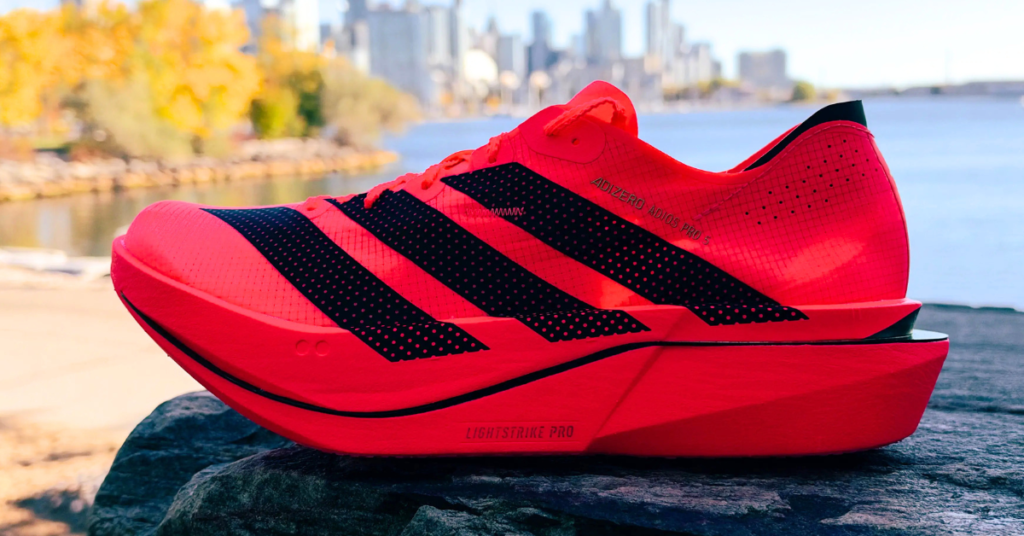
A marathon racer with a different feel underfoot
A marathon shoe has to earn its place over more than a few quick strides. The bounce is appealing, but fit, comfort and how naturally the shoe rolls through each step matter when you are trying to hold pace for hours.
That is the interesting part of the Adidas Adizero Adios Pro 5. The change to EnergyRim gives this generation a different character, with a smoother transition and a stronger emphasis on long-distance comfort. It makes a compelling case as a marathon racer, although the close fit and questions around exposed-foam wear deserve attention before race day.
The quick verdict
The Adios Pro 5 is best shortlisted for half marathons, marathons and key race-pace sessions. Its appeal is the combination of low weight, substantial cushioning and a fluid roll through toe-off. Runners who want generous toe room, strong rearfoot support or an especially sharp snap for short races should approach it more cautiously.
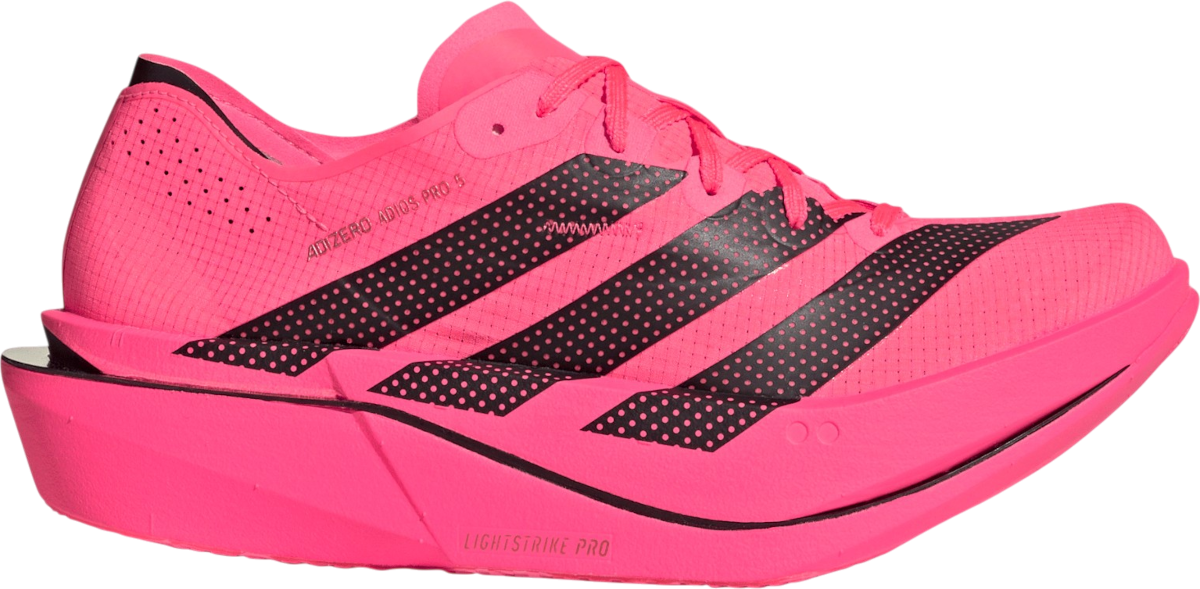
- Lightweight with generous cushioning
- Excellent grip on roads
- Secure, race-ready upper
- Snug fit and tapered toe box
The Adidas Adizero Adios Pro 5 is a lightweight marathon racer with a smooth, cushioned ride. Its EnergyRim design delivers a more fluid transition through each stride.
Adidas Adios Pro 5 specifications
| Specification | Adios Pro 5 |
|---|---|
| Category | Neutral road racing shoe |
| Weight | 177 g |
| Stack height | 39 mm heel and 35 mm forefoot |
| Heel to toe drop | 4 mm |
| Midsole | Lightstrike Pro |
| Carbon structure | EnergyRim |
| Upper | Lightlock 2.0 |
| Outsole | Lighttraxion with Continental rubber |
| Price | $330 CAD |
| Global release | September 22, 2026 |
What changed from the Adios Pro 4
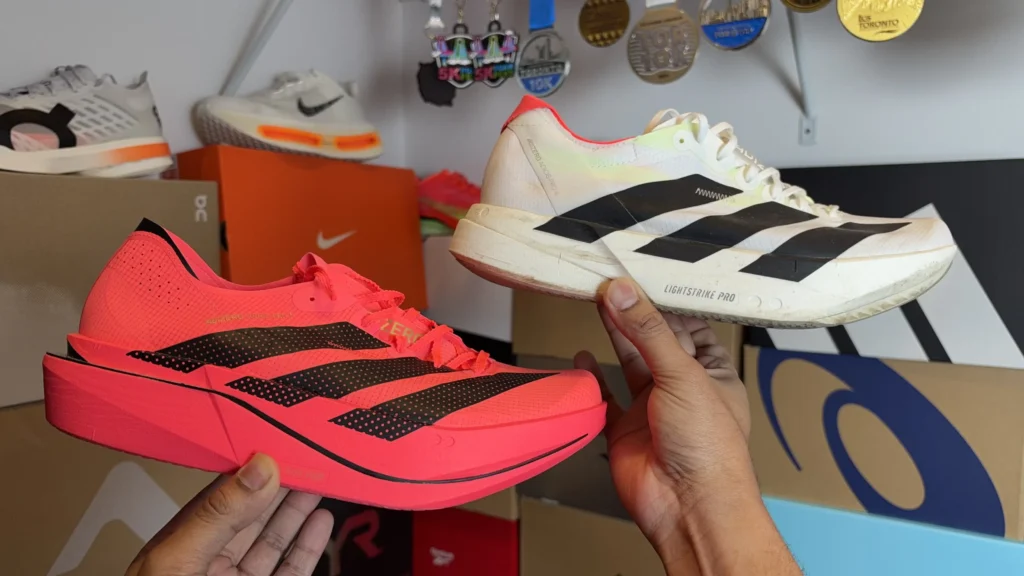
Adidas has replaced the familiar EnergyRods with EnergyRim, a carbon-infused structure arranged around the midsole. That leaves more room for foam directly beneath the foot. The official weight reduction is approximately 23 g, or 12%, compared with the Pro 4.
Adios Pro 4 vs Adios Pro 5 Comparison
| Feature | Adios Pro 4 | Adios Pro 5 |
|---|---|---|
| Carbon construction | EnergyRods | EnergyRim |
| Heel stack | 39 mm | 39 mm |
| Forefoot stack | 33 mm | 35 mm |
| Drop | 6 mm | 4 mm |
| Upper | Lightlock | Lightlock 2.0 |
The extra forefoot cushioning and revised carbon layout help explain why this feels like a meaningful update. The transition is less abrupt, with less of a distinct tipping sensation as the foot moves onto the toes. That gives the Pro 5 a more continuous roll through the stride.
Adidas also claims a 9% improvement in energy return. That’s adidas’ performance claim, not a promise of a 9% faster marathon or a matching improvement in running economy.
Upper and lockdown
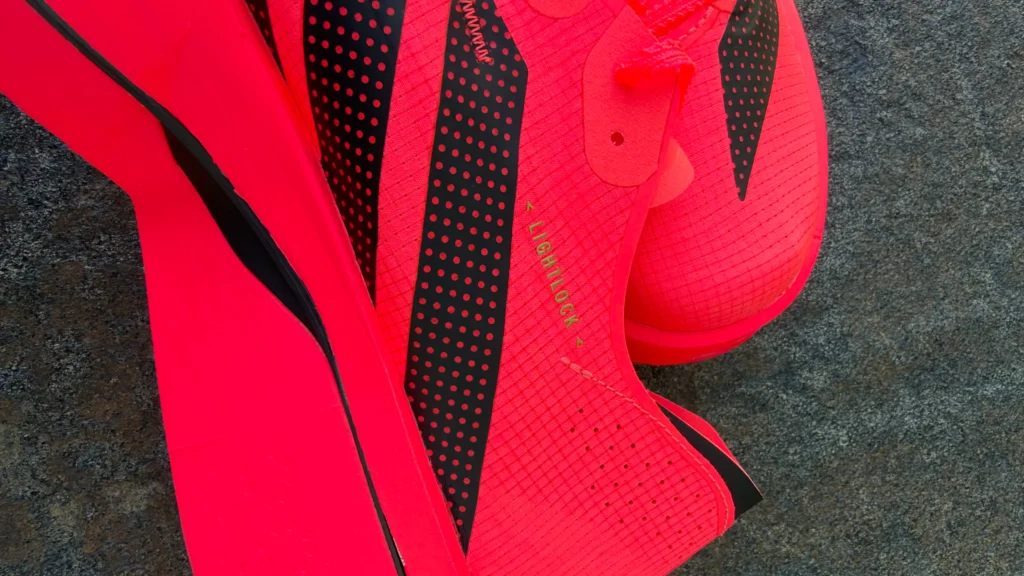
Lightlock 2.0 uses a thin upper with ventilation zones and internal reinforcement. The serrated laces and gusseted tongue are useful practical details: they help keep the lacing secure and the tongue centred without adding much bulk.
The upper has a close, low-volume fit. It should appeal to runners who like their race shoes to hold the foot securely, but that snugness needs to come from the shoe fitting properly, not from pulling the laces as tight as possible.
Breathability is a less convincing selling point. The revised material includes more ventilation, yet the available feedback does not justify calling it an exceptionally airy upper. For a warm marathon, I would put more weight on how it feels during a sustained run than on how thin it looks.
Fit and sizing
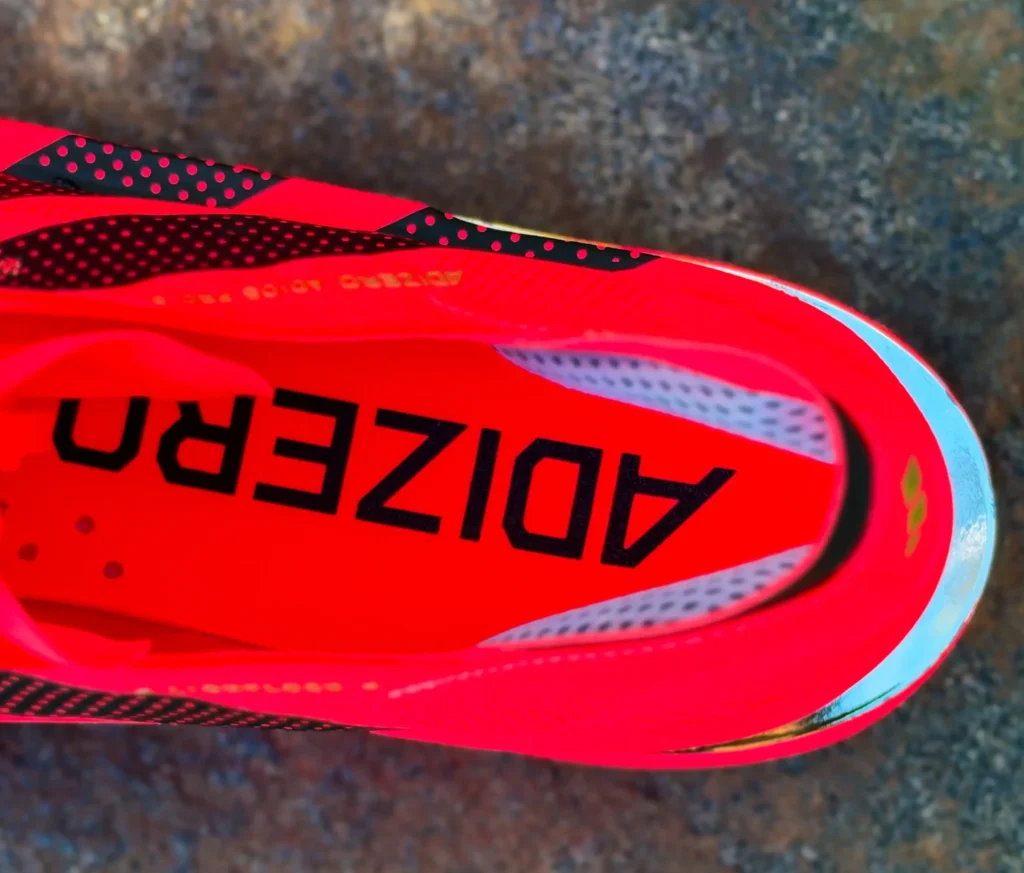
Start by trying your usual running shoe size, which is also Adidas’ recommendation. However, the tapered toe box and limited vertical space mean that true to size will not work equally well for every foot.
If you are between sizes, compare your usual size with half a size larger. Check both length and lockdown. Extra length is not a reliable fix for a shoe that feels too narrow through the arch or too shallow over the toes.
Try it with the socks you plan to race in. Walk, jog and rise onto your toes. Your heel should stay secure without pressure across the top of the foot, and your toes should have room without sliding forward. For marathon use, pay particular attention to any rubbing around the arch and heel collar. A small hot spot can become the thing you think about for the final hour.
Midsole and the EnergyRim ride
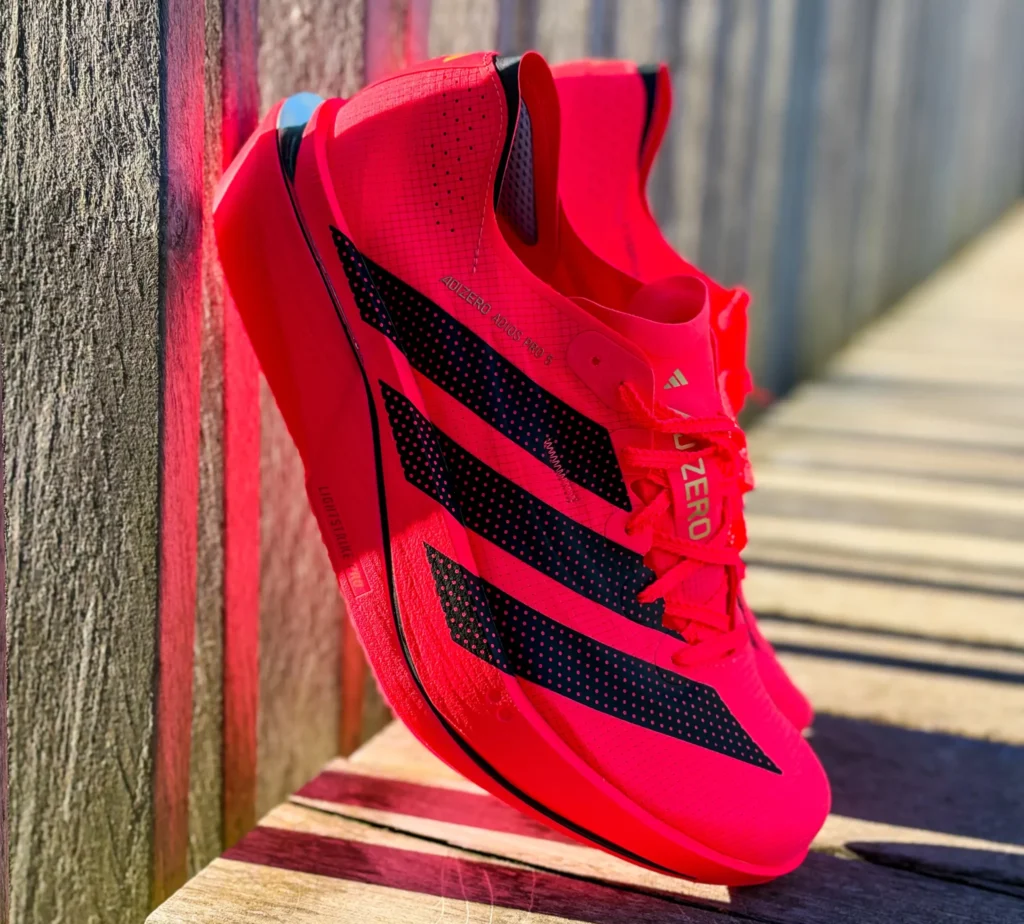
The main attraction is a cushioned centre under the foot without the same direct sensation of a conventional full-length plate. EnergyRim still provides structure, but the shoe does not need to feel harsh to feel purposeful.
This is where the Pro 5 becomes interesting for runners who find some racing shoes overly rigid. A strong rolling sensation can help a shoe feel efficient without an obvious kick at every toe-off. The Pro 5 leans toward that smoother experience.
My editorial take is that the right question is whether the shoe lets you settle into your stride. A dramatic bounce during a few strides is fun, but it tells you much less than a sustained block at your intended race effort.
Performance by pace and distance
Half marathon and marathon
These are the most convincing uses for the Pro 5. The forefoot cushioning and smooth transition suit sustained efforts, when finding a rhythm matters more than how aggressive the shoe feels during a short acceleration.
For a marathon, judge it late in a long run as well as early. Does the heel remain controlled? Is the upper still comfortable? Can you keep your normal stride without consciously adjusting to the shoe? Those answers matter more than its position on a weight chart.
5K and 10K
The Pro 5 can handle shorter races, but its softer central feel may not deliver the sharp toe-off that some runners prefer at 5K and 10K effort. That is a preference, not proof that it is slow. If you want one racer for several distances, test it at your shorter-race pace before deciding.
Workouts and easy running
I would reserve it for races and selected sessions, particularly long runs with race-pace blocks. Warm-up and cool-down kilometres are one thing; buying an expensive racing shoe mainly for relaxed daily mileage is a different proposition. Give it a clear role in your rotation.
Stability and cornering
Stability is the area where a blanket verdict would be misleading. The broader forefoot and revised midfoot construction can feel reassuring, but the rearfoot remains narrow and the shoe is more flexible in twisting than its stiff appearance suggests. It is still a neutral racer.
I would not rule it in or out solely on whether you heel strike. Test how it behaves through your own landing and transition, especially on bends and when tired. Feeling secure inside the upper and feeling supported by the platform are separate things. You need both.
Outsole durability concerns and my experience after 30 km
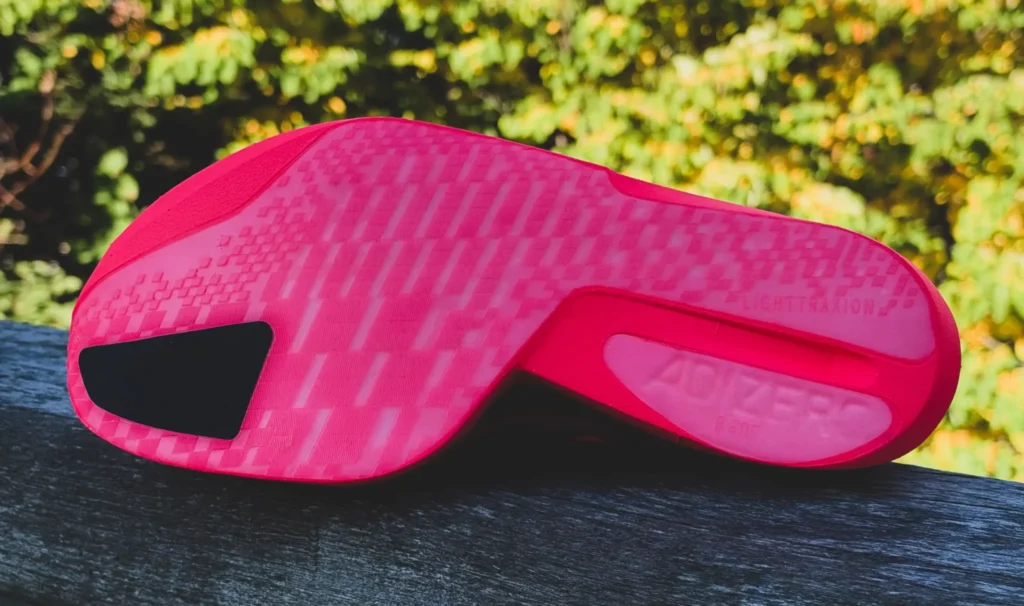
The Lighttraxion outsole and Continental rubber combination is a promising part of the package for wet road racing. Grip is a strength, but it does not answer the separate question of how long the shoe will last.
Durability has become one of the biggest talking points around the Adios Pro 5. Some runners have shared premature wear and damage around the exposed foam on the outer forefoot, while others have put in considerably more mileage without the same problems. The feedback is mixed, and the concerns deserve attention. Although this is often described as an outsole issue, part of the discussion centres on midsole foam left uncovered by the outsole.
My own pair has covered 30 km so far. At this point, there is just some minor paint chipping, the sort of cosmetic wear I would not find unusual on a running shoe. I have not experienced any major or serious durability issues. That is a more reassuring start than some of the early reports might suggest.
For me, a little paint coming off is different from foam tearing or an outsole starting to separate. I would not dismiss someone else’s damage as cosmetic simply because my pair is holding up well. Equally, I would not write off the shoe when my own experience has been positive.
Thirty kilometres is still early, so this is an initial durability update rather than a long-term verdict. Based on those kilometres, though, the Adios Pro 5 remains a solid race-day contender for me, just like the Adios Pro 4, which is also my first marathon shoe. The minor paint chipping on my pair has not changed that view.
Who should consider the Adios Pro 5
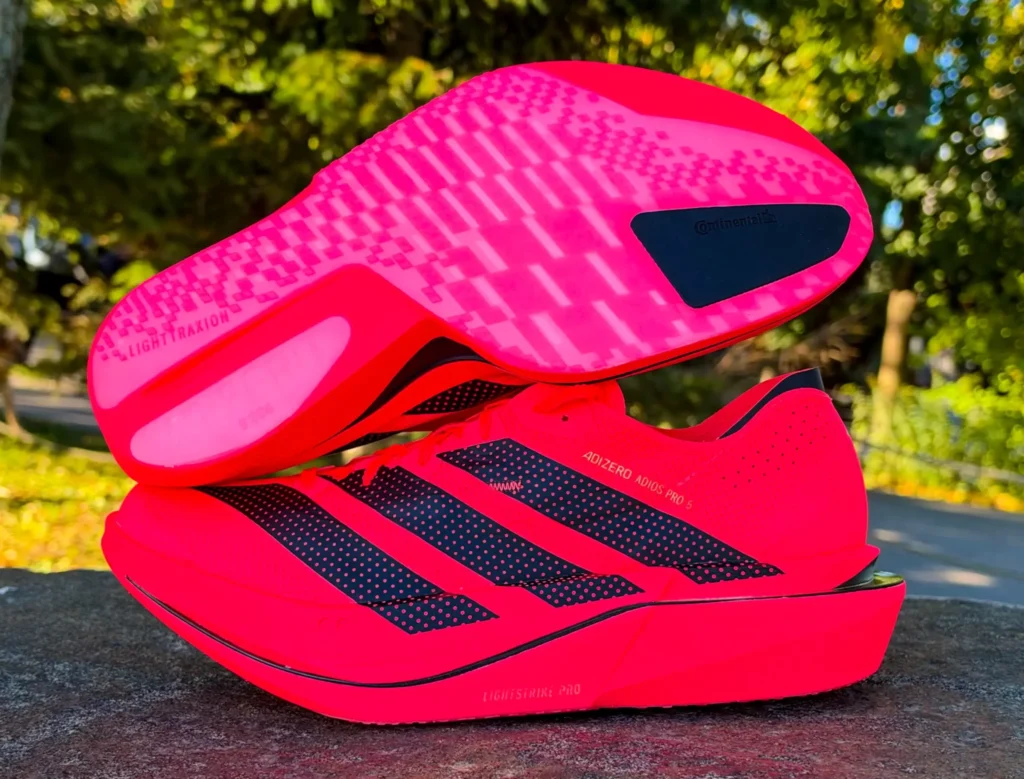
My shortlist would include runners preparing for a half marathon or marathon who prefer a light shoe with a cushioned, rolling ride and a snug upper. It is particularly interesting if a pronounced plate sensation is something you usually dislike.
I would be more hesitant if your priorities are a roomy toe box, dependable rearfoot guidance or maximum mileage for the money. The shoe needs to fit your foot and race plans before its low weight becomes an advantage.
Is it worth upgrading from the Pro 4
The case for upgrading is strongest if the previous shoe felt heavy, its transition felt too abrupt, or you wanted more cushioning under the forefoot. The changes are substantial enough to justify a try-on.
If your Adios Pro 4 fits well and has already worked for you in long workouts or races, there is less urgency. Familiarity has value close to a goal race. I would change only after the Pro 5 has shown a clear benefit in the sessions that matter to you.
Final verdict
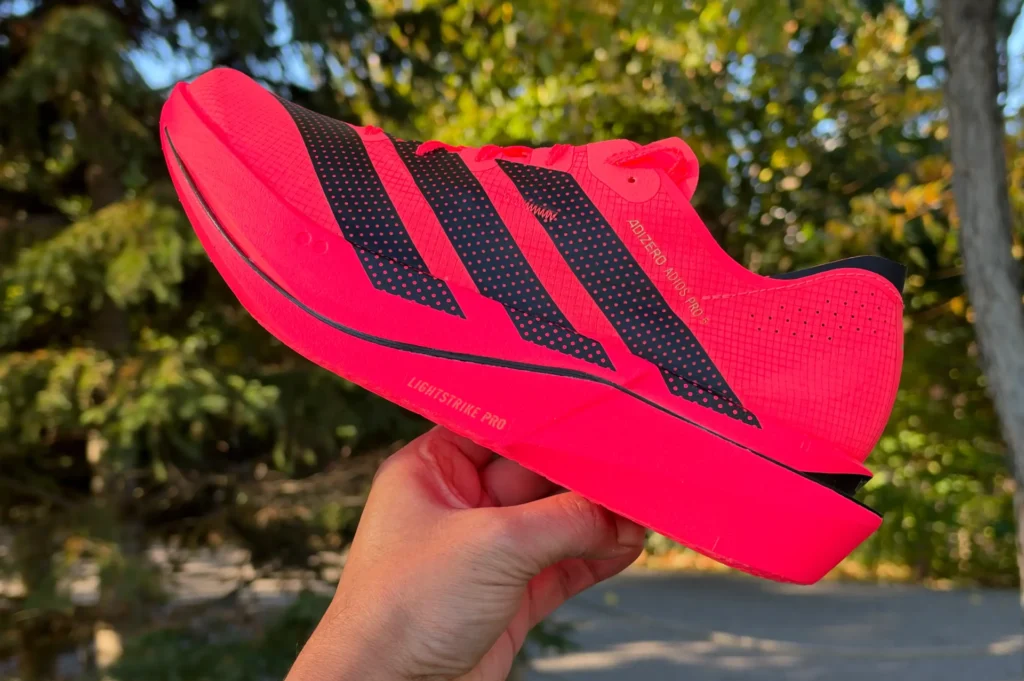
The Adios Pro 5 deserves a place on a marathon racing shortlist. The appeal is a shoe that can feel light, cushioned and fluid over repeated strides, with enough character to make race-pace running enjoyable.
After 30 km, I still see the Adios Pro 5 as a solid race-day contender, just like the Pro 4, my first marathon shoe. My pair shows only minor paint chipping, with no major durability issues so far. The mixed durability reports are worth taking seriously, but they have not matched my experience to date. I would keep the longer-term verdict open while giving the shoe credit for how it has held up for me.
Frequently asked questions
Does the Adios Pro 5 have a carbon plate
It uses a carbon-infused EnergyRim rather than a conventional full-length plate or the EnergyRods used in the Pro 4. It remains a carbon-equipped racing shoe.
Is the Adios Pro 5 suitable for wide feet
It is not an obvious choice for wide or high-volume feet. Try it on carefully, with particular attention to toe space and pressure through the midfoot.
Is there a minimum pace for this shoe
There is no useful universal pace cutoff. Your comfort, control and response at your own race effort are better selection criteria than an arbitrary marathon finishing time.
How long will the Adios Pro 5 last
There is no dependable mileage figure yet, and early experiences are mixed. My pair has covered 30 km with only minor paint chipping and no major issues. That is encouraging, but too early to establish its long-term lifespan.
Should you buy it just before a marathon
Only if you have time to establish fit and comfort beforehand. Race morning should not be your first proper test of a new shoe and sock combination.

Prateek is the founder of Athletico, a Toronto-based running community of over 90,000+ running enthusiasts. A lifelong running gear nerd, Prateek has been testing and reviewing running shoes since 2021, with a focus on honest, real-world performance rather than marketing hype.
With 20+ 10K races, four half marathons, and 2 full marathons, Prateek brings both experience and curiosity to every review. From daily trainers to race-day shoes, each product is tested on the road, track, and long runs because the best insights come from miles, not spec sheets.
Through in-depth reviews and practical buying guides, Prateek helps runners make smarter choices about their gear, train with confidence, and enjoy the process of running a little more.