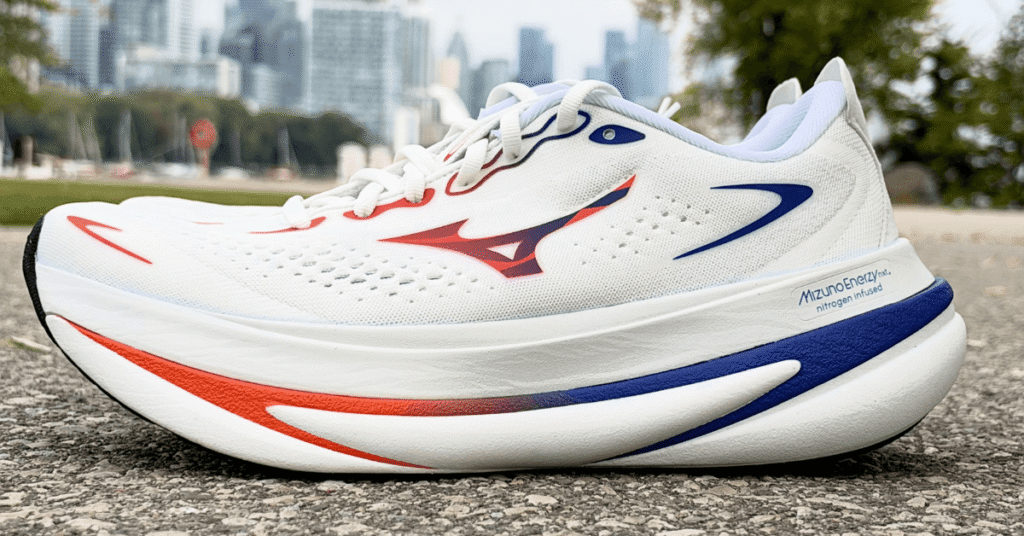
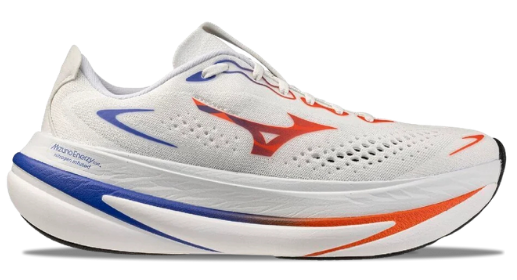
An easy run has its own rhythm. You get through the first few minutes, find a comfortable effort and settle in. On that kind of day, a shoe earns its place by feeling comfortable at the pace you actually want to run.
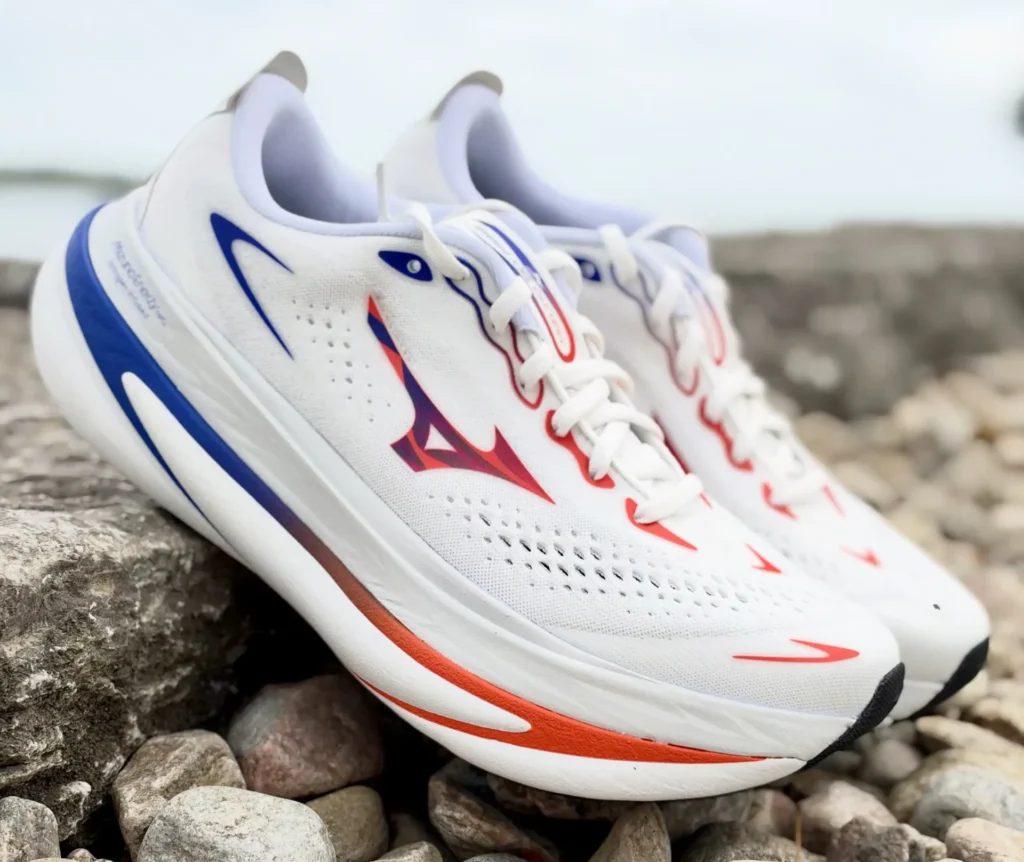
The Mizuno Sky Prime is built around that part of training. It brings a tall midsole, a broad platform and a soft upper to the premium cushioning category. Its appeal is straightforward: a generous amount of shoe for runners who enjoy a cushioned, composed feel during everyday mileage.
My reading of its design is that it makes most sense as a dedicated easy-day option. The more complicated question is whether its size, weight and price suit your needs. Plenty of cushioning can be appealing, but it is only useful if the whole shoe works with your stride.
- Generous cushioning
- Broad, stable platform
- Smooth, relaxed ride
- High price for limited versatility
A max-cushioned daily trainer built for easy miles, with a tall, broad platform and a soft, comfortable ride. Its substantial build makes it better suited to relaxed running than faster workouts.
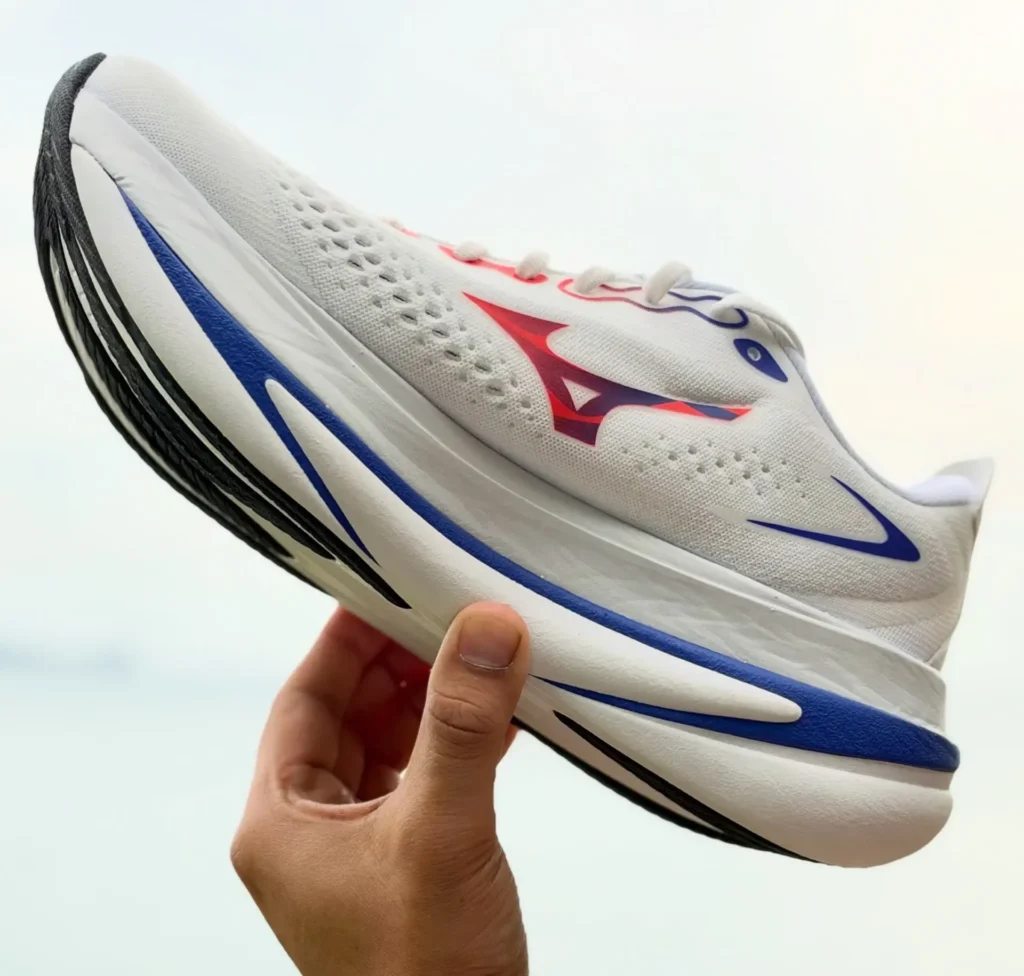
Mizuno Sky Prime
Full specification sheet
| Feature | Mizuno Sky Prime |
|---|---|
| Category | Max-cushioned road training shoe |
| Stack and drop | 47 mm heel / 41 mm forefoot; 6 mm drop |
| Published sample weight | 295 g in men's US 9 |
| Midsole | ENERZY NXT+ above ENERZY NXT; no plate |
| Upper | Soft stretch mesh with a gusseted knit tongue |
| Outsole | Mizuno X10 rubber |
| Reported US launch price | US$200 / $250 CAD |
Where it fits in the Mizuno range
Mizuno places the Sky Prime in its Float collection, alongside the Wave Sky. The Sky Prime introduces ENERZY NXT+ within a dual-layer construction and puts particular emphasis on cushioning with structure. It should be considered on its own merits rather than assumed to be a direct replacement for the Wave Sky.
Upper comfort and lockdown

Soft stretch mesh and a gusseted knit tongue give the upper a clear comfort brief. The tongue’s side attachments are intended to help maintain its position, while the stretch in the mesh allows some give around the foot.
That construction is only one part of a good fit. You still need the heel to stay secure and the midfoot to feel held without excessive lace pressure. If you have to crank the laces down to stop your foot moving, a soft upper will not fix the mismatch.
Toe-box width deserves particular attention. The width of the outsole tells you about the platform beneath your foot, not necessarily the space inside the shoe. Avoid assuming that a broad-looking shoe will accommodate every wide foot. Try your usual running size first, then compare sizes if the length or hold feels wrong.
Breathability is another area where the material description cannot settle the question. A useful hot-weather verdict needs time in the conditions you actually run in. Until then, I would keep upper comfort and ventilation as separate considerations.
Two foam layers with different jobs

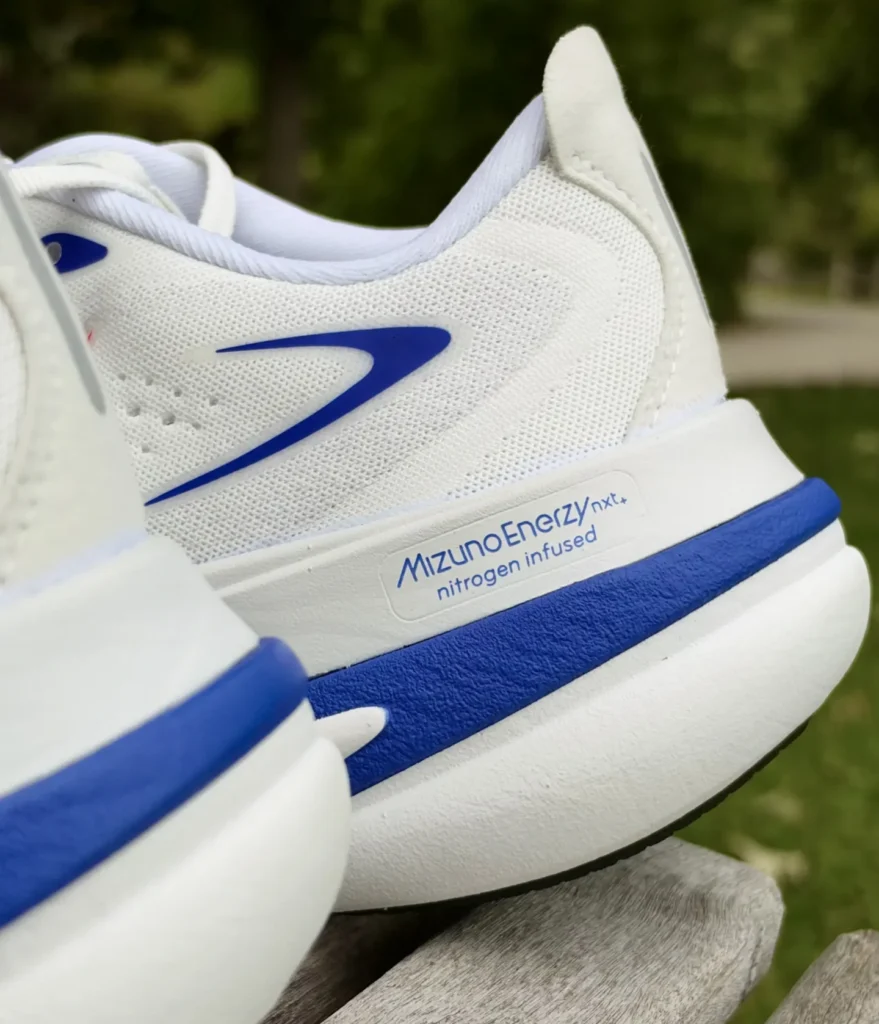
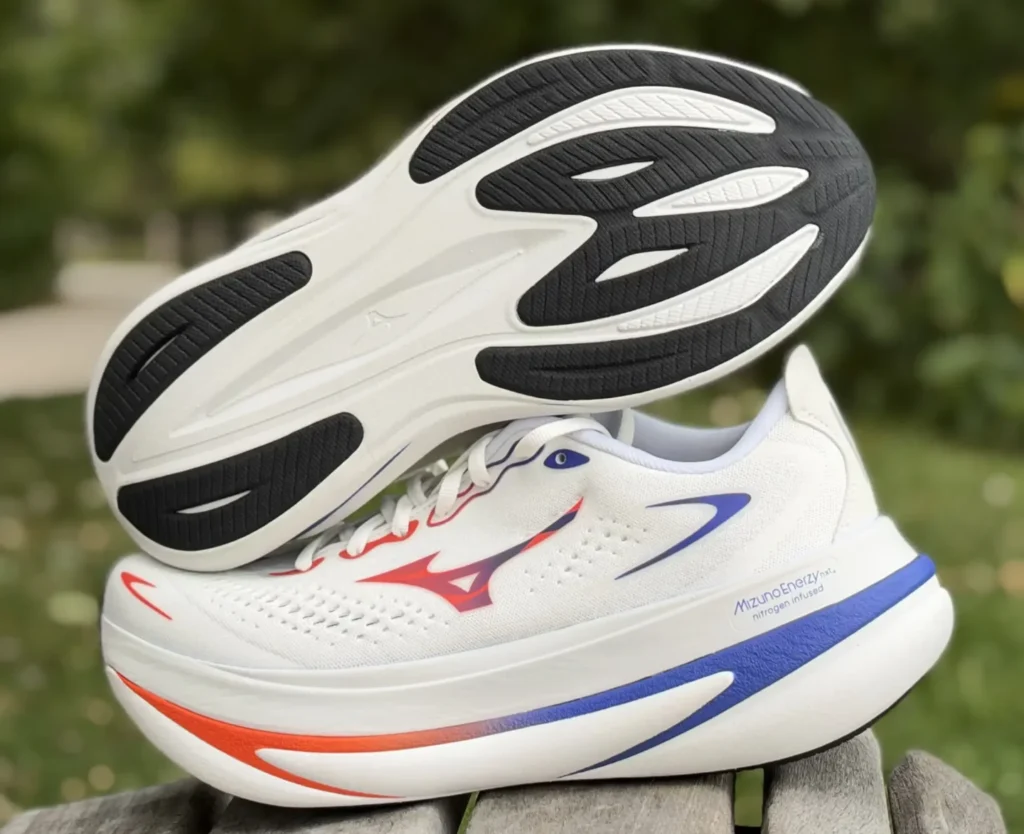
The main update underfoot is ENERZY NXT+, which Mizuno identifies as nitrogen-infused PEBA. It sits above ENERZY NXT in a construction intended to combine cushioning with support. Mizuno calls the arrangement its Clip Midsole Design.
The useful way to understand this is to think about the whole platform. The layer nearest your foot contributes to the initial cushioning sensation, while the lower structure influences how the shoe supports that compression. The outcome depends on geometry and foam behaviour together.
A premium foam ingredient does not automatically make a shoe a fast trainer. Nor does a taller sole automatically make it more comfortable for you. With the Sky Prime, the relevant question is how readily you settle into an easy stride, and whether the cushioning feels consistent as the run goes on.
Height and stability
At 47 mm in the heel, the Sky Prime has a considerable platform beneath the foot. Mizuno pairs that height with a wide base and a structured lower midsole. The design intent is a more controlled landing without giving up the generous cushioning.
I would describe that as an approach to stability within a cushioned trainer. It should not be read as a promise that the shoe will meet every runner’s support needs. Turning, running on road camber and moving across uneven paving are useful parts of assessing any shoe this tall.
Easy runs and longer ride experience

The early evidence points towards a relaxed ride with a smooth transition and some bounce. That combination gives the Sky Prime a plausible role on everyday aerobic runs, where a pleasant feel underfoot matters more than a particularly quick turnover.
For longer distances, the purpose of the run matters more than a fixed mileage cut-off. An easy long run and a long run with sustained faster blocks ask different things of a shoe. The first fits the Sky Prime’s comfort brief. For the second, its weight and bulk deserve closer consideration.
There is also no universal “easy pace” that defines whether it works. The useful test is your own effort and stride. A shoe that feels comfortable to one runner at a particular pace may feel cumbersome to another at the same speed.
Weight and versatility
The published 295 g sample figure puts the Sky Prime firmly in substantial-trainer territory. That does not make it unsuitable for running, but it is a real trade-off. Comfort can justify extra material; it cannot make the material disappear.
I would be cautious about choosing it as a single shoe for a varied week of running. If that week includes intervals, short hill repetitions or regular progression runs, decide how much versatility you need before paying for a specialist comfort option. If nearly all your running is relaxed and the fit works, that narrower brief may be perfectly acceptable
Outsole and grip

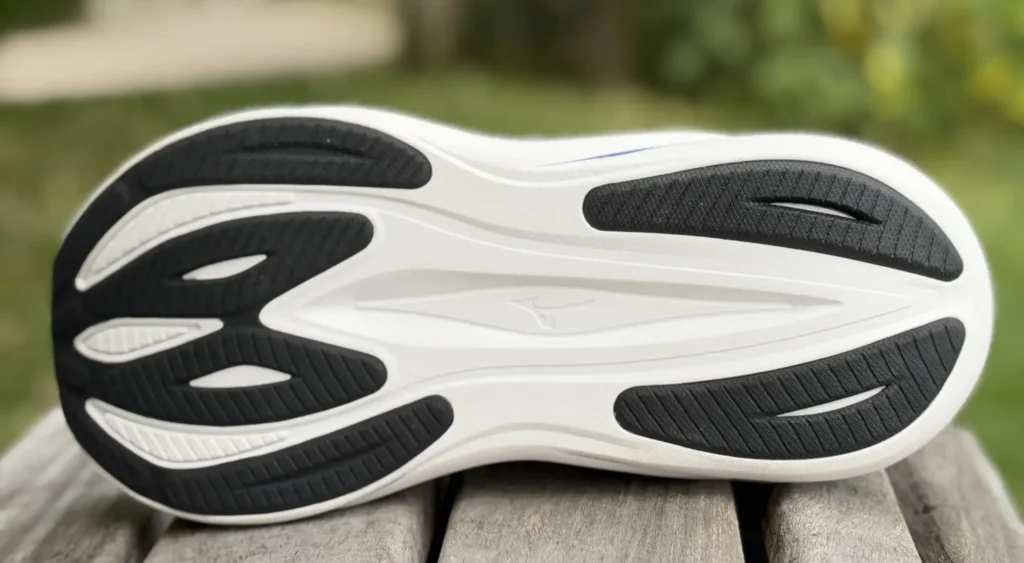
Underneath, there’s Mizuno’s X10 rubber. It’s a road-training outsole, and the rubber coverage is a sensible choice for a shoe intended to rack up miles. It’s the same X10 rubber which Mizuno has been using in most of their models and I never had any grip issues with Mizuno shoes. The Grip is solid on both wet and dry pavement.
Is it worth the price
At US$200 / $250CAD launch price, the Sky Prime needs to earn regular use. Its value is strongest when it fills an actual gap: you want a cushioned pair for relaxed runs and your existing shoes do not give you that experience.
If your current trainer already handles those miles comfortably, the case is less compelling. I would put fit and a short test run ahead of the foam name, the stack measurement or a favourable first impression in the shop.
Final verdict

The Mizuno Sky Prime has a clear proposition: generous cushioning, a comfort-oriented upper and a broad platform for everyday road running. The likely compromise is how much shoe you are carrying when you want to change pace.
I would shortlist it for runners who deliberately want a substantial easy-day shoe. For runners seeking a lighter feel, stronger ground connection or one pair for every workout, I would look more widely. Its best argument is simple: it could be the pair you enjoy wearing for the unhurried miles that make up much of your week.
Prateek is the founder of Athletico, a Toronto-based running community of over 90,000+ running enthusiasts. A lifelong running gear nerd, Prateek has been testing and reviewing running shoes since 2021, with a focus on honest, real-world performance rather than marketing hype.
With 20+ 10K races, four half marathons, and 2 full marathons, Prateek brings both experience and curiosity to every review. From daily trainers to race-day shoes, each product is tested on the road, track, and long runs because the best insights come from miles, not spec sheets.
Through in-depth reviews and practical buying guides, Prateek helps runners make smarter choices about their gear, train with confidence, and enjoy the process of running a little more.