

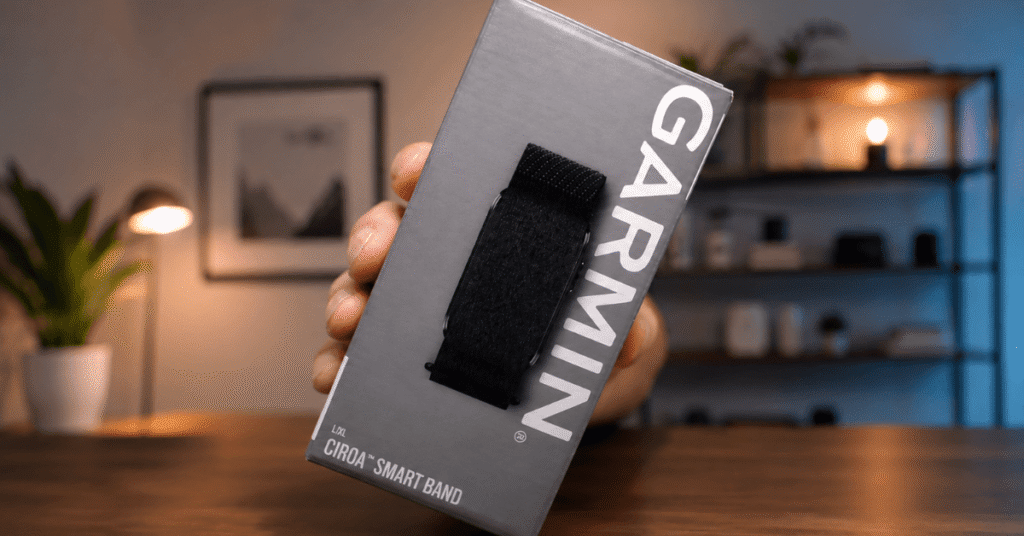
Garmin has spent years putting more information on our wrists. Bigger displays, detailed maps, training metrics, notifications, navigation and increasingly advanced health data have become normal on its watches.
The Garmin Cirqa goes in almost the opposite direction.
There is no display. No maps. No notifications constantly asking for your attention. You wear it, let it collect your health and activity data in the background, and open Garmin Connect when you actually want to look at it.
That sounds simple, but the Cirqa is actually quite an interesting product for Garmin.
It is Garmin’s first screen-free smart band, built around 24/7 health, sleep, recovery and activity monitoring. It also brings familiar Garmin features such as Body Battery, Training Readiness, HRV status, sleep tracking and VO2 max into a much more discreet wearable. Core tracking does not require an ongoing subscription.
So is this finally Garmin’s proper answer to Whoop? And perhaps more importantly, does it make sense if you already own a Garmin watch?
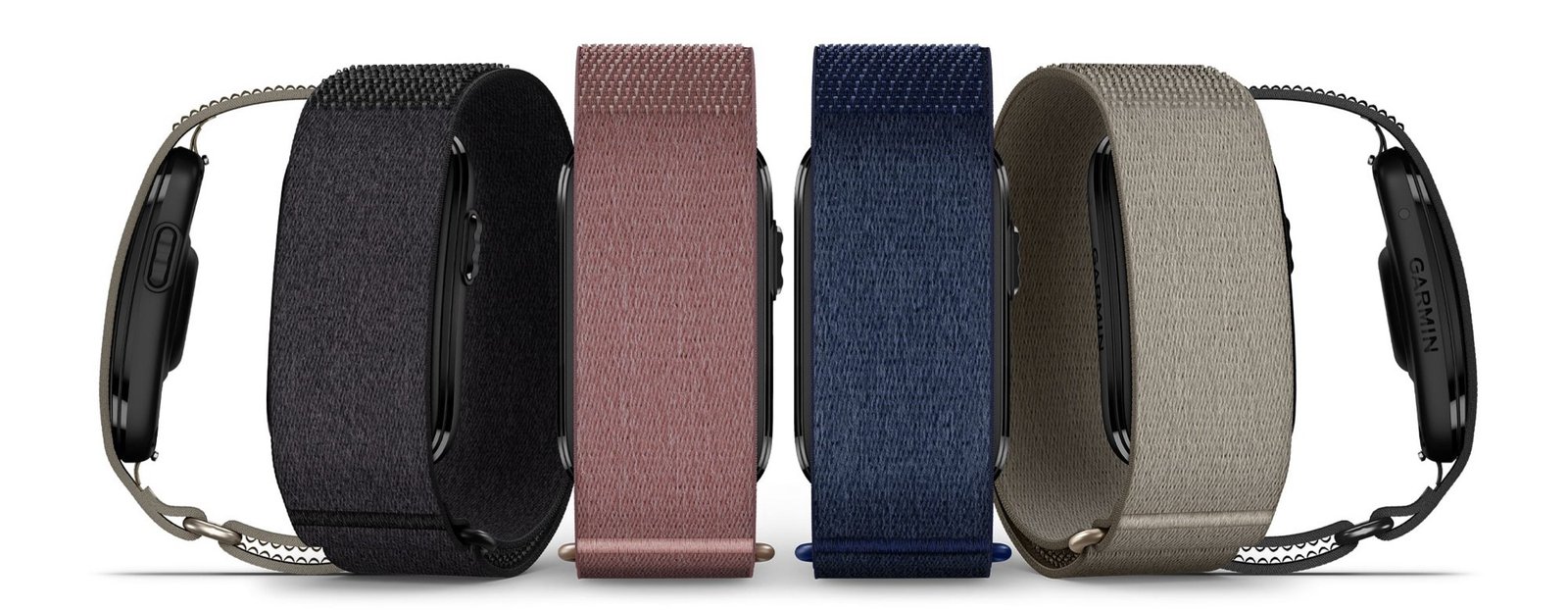
- No monthly subscription
- Comfortable design for daily wear
- Integrates seamlessly with Garmin Connect
- lack of a built-in GPS
- Heart-rate spike inaccuracies during high-intensity workouts
The Garmin Cirqa is a $199.99 screenless fitness tracker designed for 24/7 health, sleep, and recovery monitoring. It connects directly to the Garmin Connect app and does not require a monthly subscription.
Garmin Cirqa review: Quick verdict
The Garmin Cirqa makes the most sense when you think of it as a Garmin data collector rather than a Garmin watch replacement.
It quietly collects the health and recovery information Garmin users are already familiar with, but without making you wear a full smartwatch around the clock.
That makes it particularly interesting if you use a Forerunner, Fenix or Garmin Edge for serious workouts but would rather wear something smaller while sleeping, working or going about the rest of your day.
The screenless approach is also genuinely refreshing. During exercise you are no longer staring at pace, heart rate or another performance metric every few minutes. For easy runs and everyday training, there is something enjoyable about simply exercising and reviewing the numbers later.
The trade-off is obvious. If you need pace, maps, interval instructions or other information while exercising, Cirqa cannot give it to you. Outdoor GPS tracking also depends on a connected phone rather than GPS built into the band.
At $199.99 in the US, it is not particularly cheap either. But unlike Whoop, Garmin does not require a subscription to access the core health, sleep and training features.
My take: Cirqa is not Garmin trying to replace the smartwatch. It is Garmin giving you another way to stay inside its ecosystem without having a screen strapped to your wrist 24/7.
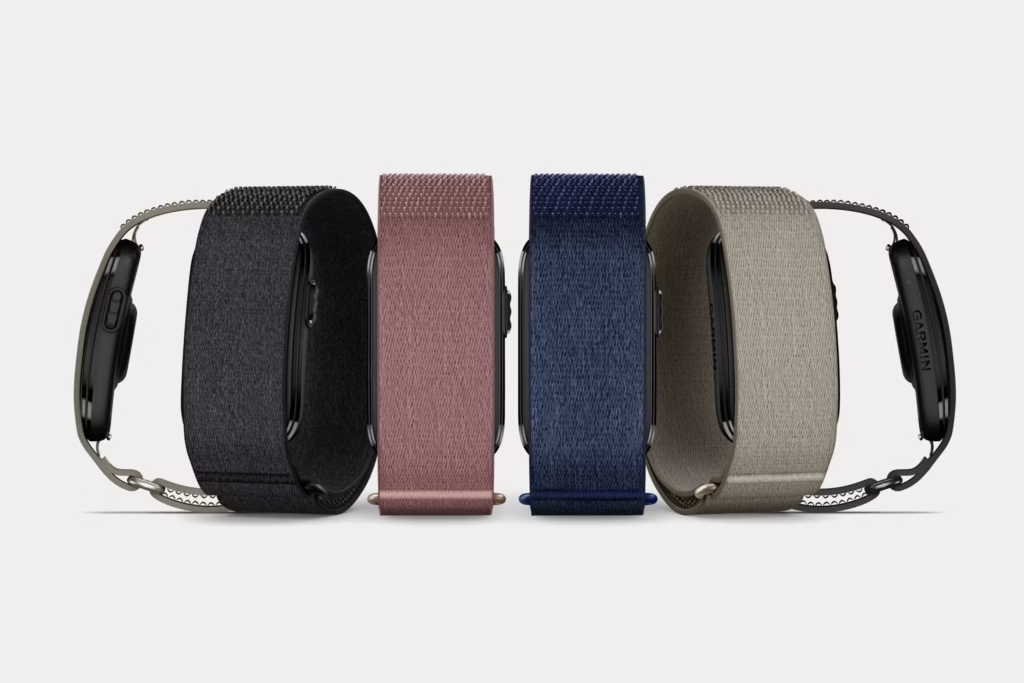
Garmin Cirqa: Key Specifications
A full breakdown of the Cirqa's core hardware and health features
Garmin officially rates Cirqa for up to 10 days of battery life and 5 ATM water resistance. Its manual also confirms that certain settings, including Pulse Ox and heart-rate broadcasting, can reduce battery endurance.
What exactly is Garmin Cirqa?
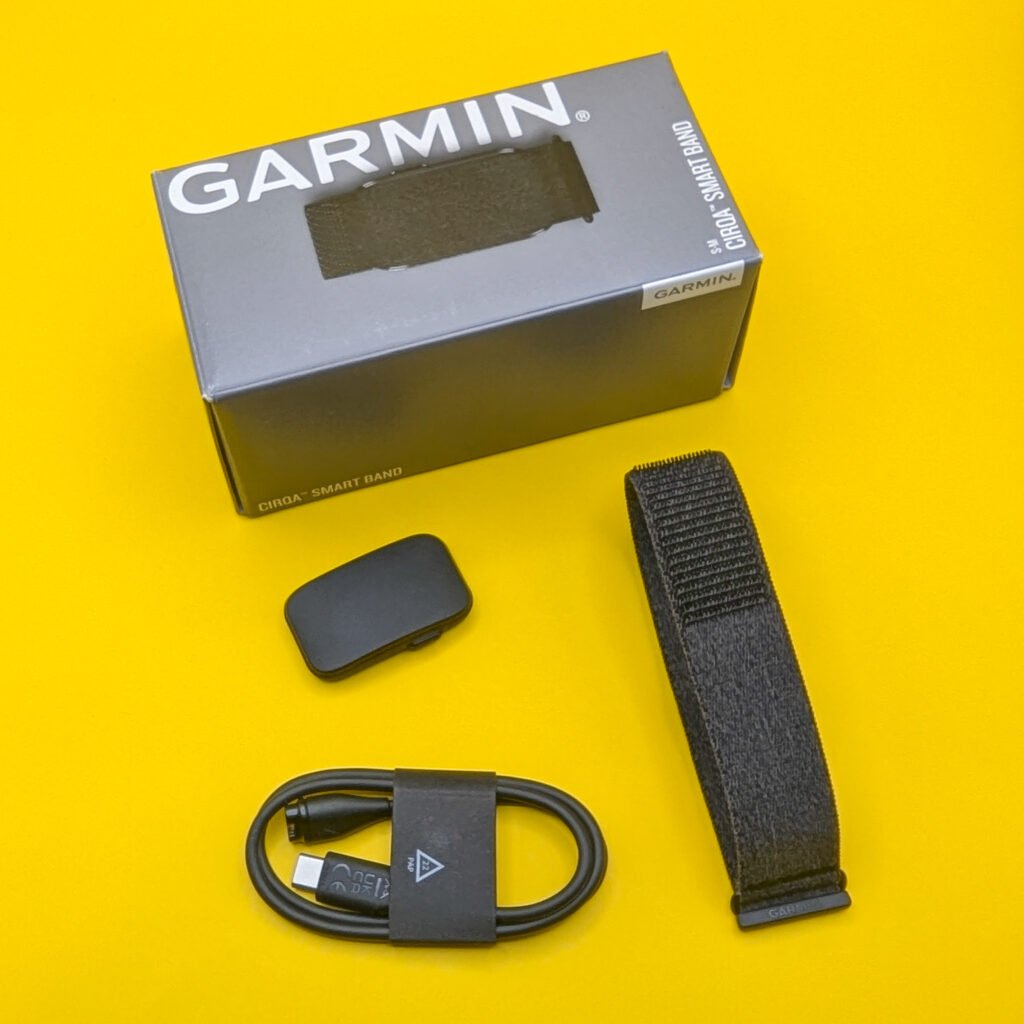
Cirqa is best described as a screenless health and fitness tracker.
There is a sensor module sitting inside a soft fabric band, but instead of giving that module a display, Garmin deliberately keeps interaction to a minimum.
Most of the experience happens inside Garmin Connect.
That distinction is important because this isn’t simply a cheaper Garmin watch with its screen removed.
A Garmin Forerunner is primarily useful during a workout. It can show pace, distance, intervals, heart-rate zones, maps and training instructions while you are exercising.
Cirqa is more interested in everything happening around the workout.
How did you sleep?
What is your resting heart rate doing?
How is your HRV trending?
How much stress are you carrying?
How recovered are you?
How much training have you been doing?
Those signals are then fed into Garmin metrics such as Body Battery and Training Readiness. Garmin also supports sleep score, sleep stages, respiration, nap detection and sleep coaching on Cirqa.
That is why Cirqa makes considerably more sense as a 24/7 companion than as your only serious sports device.
Design and comfort
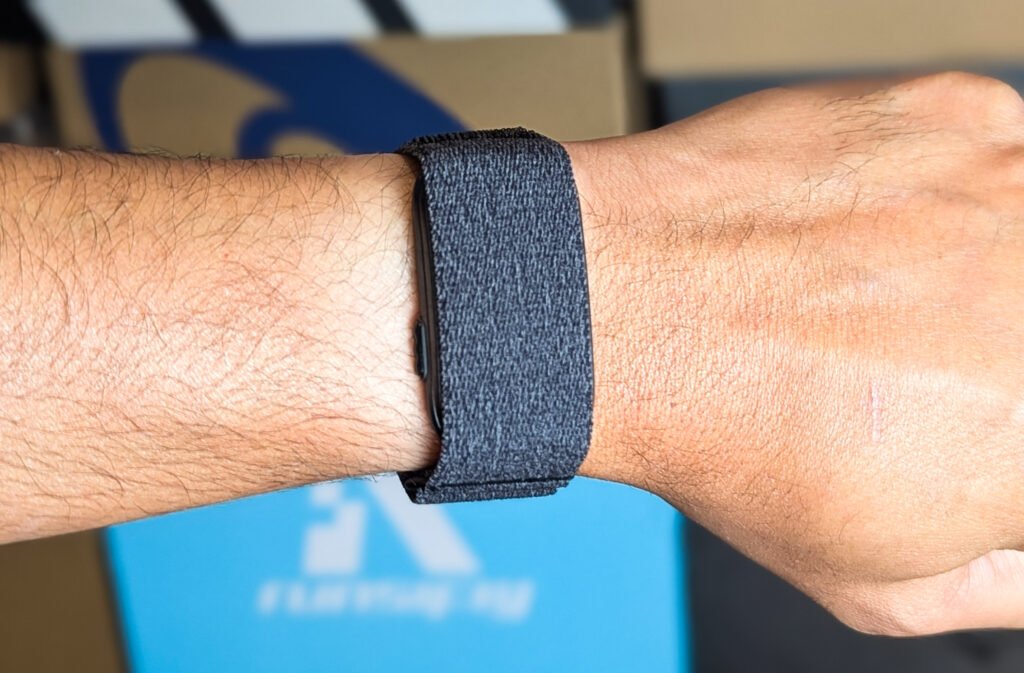
There isn’t an enormous amount Garmin can do aesthetically with a device that intentionally has no display.
The Cirqa consists of a rectangular sensor module sitting inside a fabric ComfortFit-style band. It’s understated and clearly designed to blend into everyday life rather than look like another piece of technology demanding attention.
It is not tiny, though.
The module measures roughly 27 x 47 x 9mm, that is larger than some competing screenless trackers. Stuff lists the module itself at 14.8g, while complete-band weights reported elsewhere are around 21g depending on size.
Despite that size, comfort appears to be one of its strongest qualities.
The entire point of a device like Cirqa is keeping it on as consistently as possible. Every night you decide a watch is too uncomfortable and leave it on the bedside table creates another gap in the sleep and recovery data.
Cirqa is specifically trying to remove that friction.
Garmin also offers an arm-band option, letting the sensor sit above the elbow rather than on the wrist. Garmin itself supports both wrist and arm positioning, and the option can be useful for activities where wrist movement makes optical heart-rate measurement more difficult.
The button is a small feature that makes a big difference
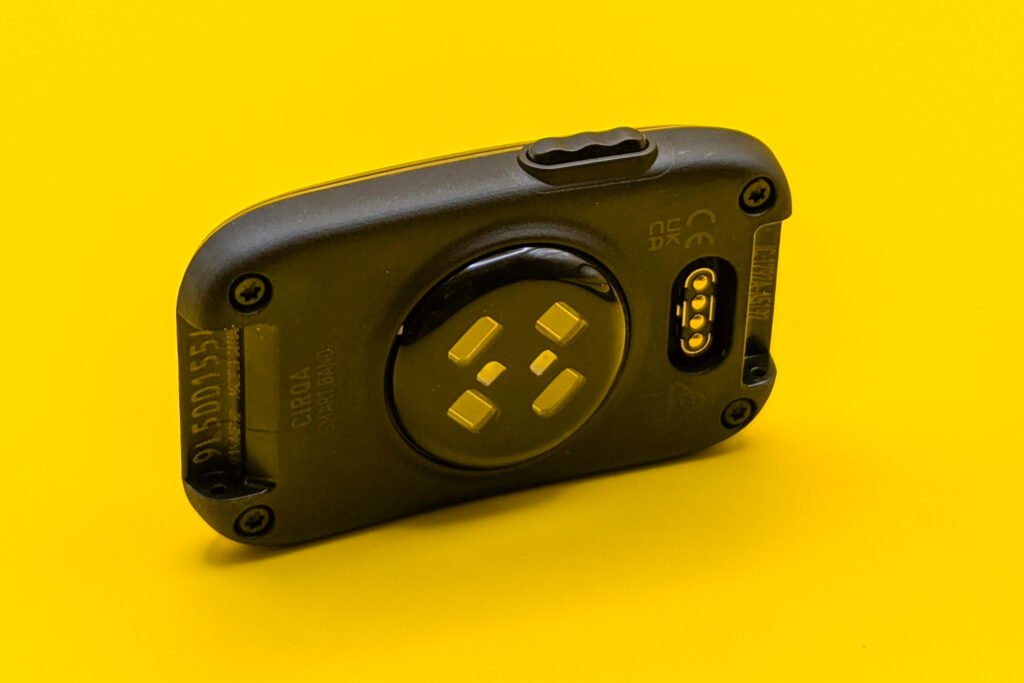
One of my favourite design decisions on Cirqa is also probably the least impressive-looking one.
It has a button.
That sounds almost ridiculous to celebrate, but it solves one of the biggest annoyances with completely screenless trackers.
If there is no display and no physical control, starting a workout usually means either trusting automatic detection or opening your phone.
Garmin gives Cirqa a physical side button instead.
You can select a favourite activity inside Garmin Connect and start it directly from the band. Pressing the button starts recording and produces vibration and LED feedback; pressing it again stops the activity.
It is simple, but that simplicity works.
You don’t need to wonder whether the tracker recognised the start of your run, and you don’t have to pull your phone out just because you want accurate workout timing.
For a minimalist wearable, that feels like exactly the right amount of interaction.
Garmin Connect is really the Cirqa’s screen
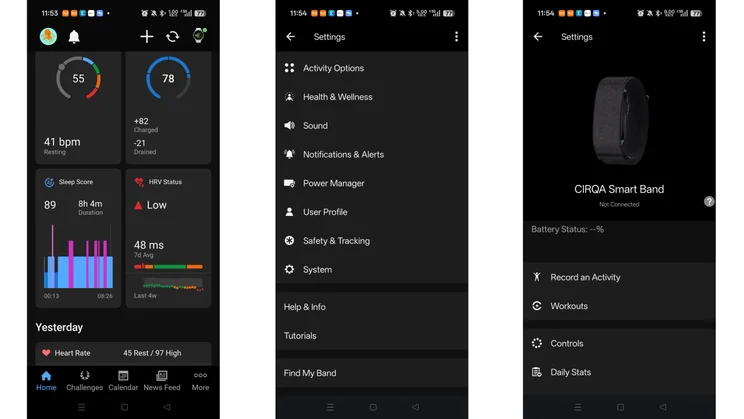
Removing a display does not eliminate the interface.
It moves it somewhere else.
With Cirqa, your real display is Garmin Connect.
That is both one of the product’s biggest strengths and one of its weaknesses.
On the positive side, Garmin already has one of the deepest fitness ecosystems available. Cirqa can feed into familiar data including sleep, HRV, Body Battery, Training Readiness, VO2 max, recovery and workout history. If you already have years of Garmin activity data, Cirqa becomes another device contributing to the same ecosystem instead of asking you to start from zero somewhere else.
This is especially valuable if you already rotate between Garmin products.
You could use a Forerunner for running, an Edge for cycling and Cirqa for sleep and everyday health monitoring while keeping the bigger picture in Garmin Connect.
But Garmin Connect is also dense.
Stuff found that some information can feel buried, particularly for someone who isn’t already familiar with Garmin’s software.
With a Garmin watch, that complexity is partly hidden because you can get many useful numbers directly from your wrist.
Cirqa removes that shortcut.
Want to check last night’s sleep score? Phone.
Want to see Training Readiness? Phone.
Want to inspect your HRV trend? Phone.
That is not necessarily a problem, because avoiding constant checking is part of the Cirqa philosophy. But it means your enjoyment of this product will depend heavily on whether you like Garmin Connect.
Health and wellness tracking
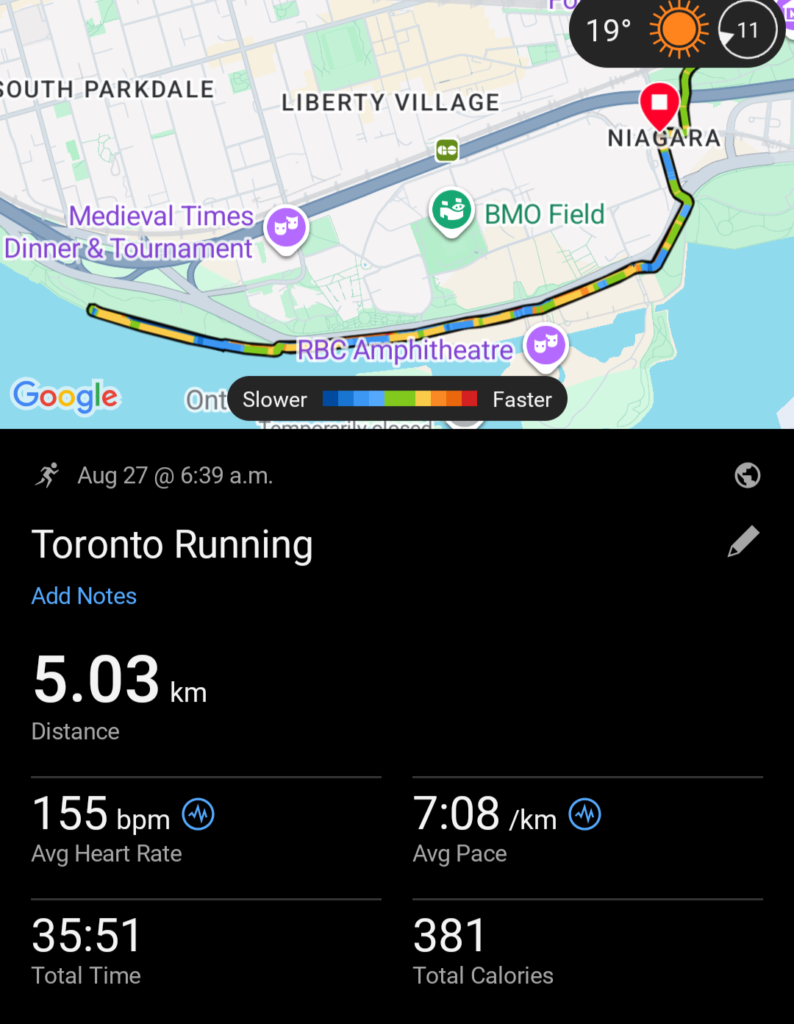
The lack of a screen does not mean Garmin has stripped away the health side of the experience.
Cirqa can track wrist-based heart rate, stress, Pulse Ox, skin temperature and other wellness metrics. Garmin also uses the collected information to provide familiar higher-level metrics such as Body Battery.
This is where the product starts making much more sense.
Raw heart-rate numbers are useful, but the reason many people stay inside Garmin’s ecosystem is how the company connects multiple signals together.
Body Battery, for example, attempts to give you a simple picture of how much energy you have available based on things such as stress, activity and recovery.
Training Readiness goes further into the training side of things, helping contextualise whether your body appears ready for another demanding session.
The important word here is context.
These numbers are estimates based on sensor data and algorithms. Cirqa cannot know whether your quads are sore after yesterday’s squats, whether you are dealing with an injury or whether your coach intentionally programmed an easier week.
Kingy’s coverage makes a useful point here: recovery metrics should be treated as another input into your decision rather than as an instruction you must blindly follow.
That is a sensible way to use almost any recovery wearable.
Sleep and recovery tracking
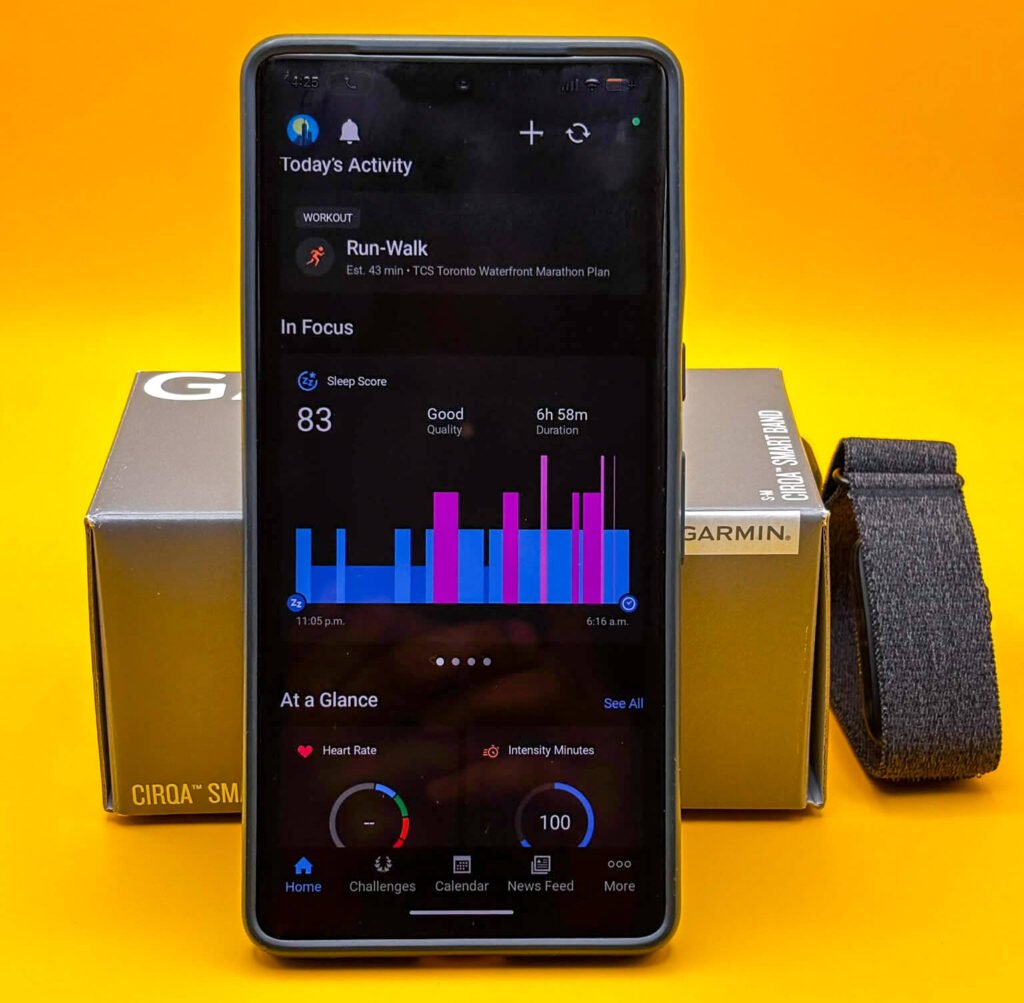
Sleep is arguably one of the strongest reasons for Cirqa to exist.
Plenty of runners are happy wearing a Garmin watch during the day but don’t particularly enjoy sleeping in a Fenix or another chunky GPS watch.
Cirqa offers the possibility of maintaining continuous Garmin recovery data without sleeping with the same watch you use for long runs, races or hiking.
Garmin provides sleep duration, sleep stages, sleep score, HRV, respiration, nap detection and Sleep Coach functionality. Sleep Coach can adjust sleep recommendations based on factors including activity history and HRV status.
The band also supports a smart wake alarm using vibration, so the absence of a screen does not mean the device is completely passive overnight.
Independent testing has been encouraging as well.
Cirqa correctly picked up periods of waking during the night and found its sleep records consistent with the reviewer’s perceived sleep quality. Stuff similarly described the sleep data as consistent with competing trackers.
I would still avoid treating consumer sleep-stage data as laboratory-level information. The more useful part is usually looking at trends: sleep duration, HRV, resting heart rate and recovery over weeks rather than obsessing over whether a wearable labelled one particular 20-minute period as deep or REM sleep.
Workout tracking
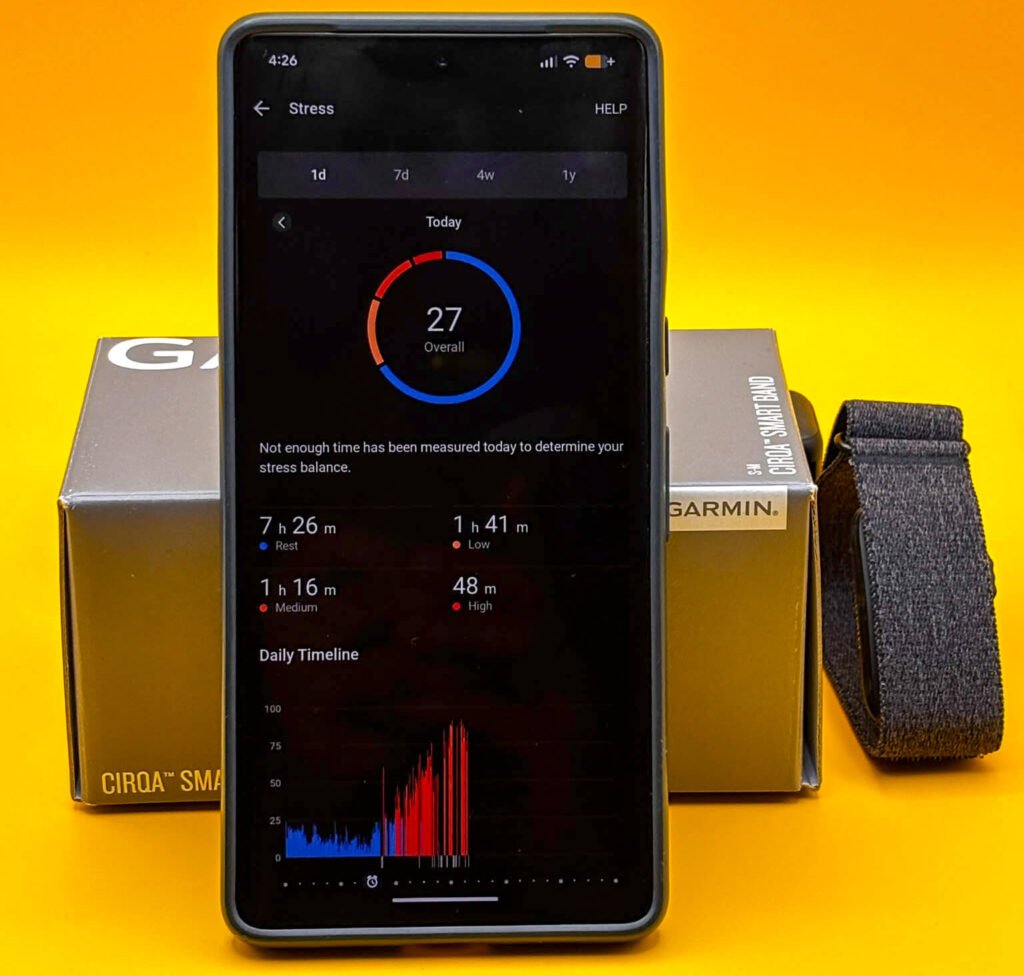
Garmin supports more than 80 activity types on Cirqa, including running, walking, cycling, strength activities, yoga and many others. You can start a selected favourite directly with the button or record through Garmin Connect.
Automatic activity detection is also supported.
Garmin says Cirqa uses recorded movement, effort and historical account information to identify activities, and that detected sessions can be reviewed and edited inside Garmin Connect.
There is an interesting machine-learning-style element to the experience as well: Garmin says that confirming or correcting detected activities helps the band classify future activity more accurately.
Automatic detection is not perfect, though.
Stuff found that running and cycling detection generally worked but highlighted a more frustrating limitation: if the device fails to detect a workout properly, recreating the missing session retrospectively is not as flexible as on some rivals.
That makes the physical button even more valuable.
If the workout matters, I would manually start it rather than relying entirely on automatic recognition.
What is running with a screenless tracker actually like?
This is probably the most interesting part of Cirqa.
Not because it is a better running device than a Garmin Forerunner. It isn’t.
It is interesting because it changes the experience.
A normal GPS running watch constantly gives you information.
Pace.
Distance.
Heart rate.
Lap pace.
Time.
Intervals.
Training alerts.
That is extremely useful when you are trying to hit a specific session or race target.
But not every run needs that much information.
Running is based more on perceived effort and how the body felt instead of constantly looking at pace and worrying about what the finished activity would look like on Strava.
There is something appealing about that.
You can still collect heart-rate and recovery information in the background, but the device itself cannot interrupt you with numbers.
For easy runs, recovery runs or simply going out because you enjoy running, that can be surprisingly freeing.
For intervals, race-specific sessions, tempo work or anything requiring precise pacing, I would want a proper running watch back immediately.
And that, in my view, is exactly how the Cirqa should be understood.
It doesn’t replace a Forerunner.
It gives you permission not to wear one all the time.
Heart-rate accuracy
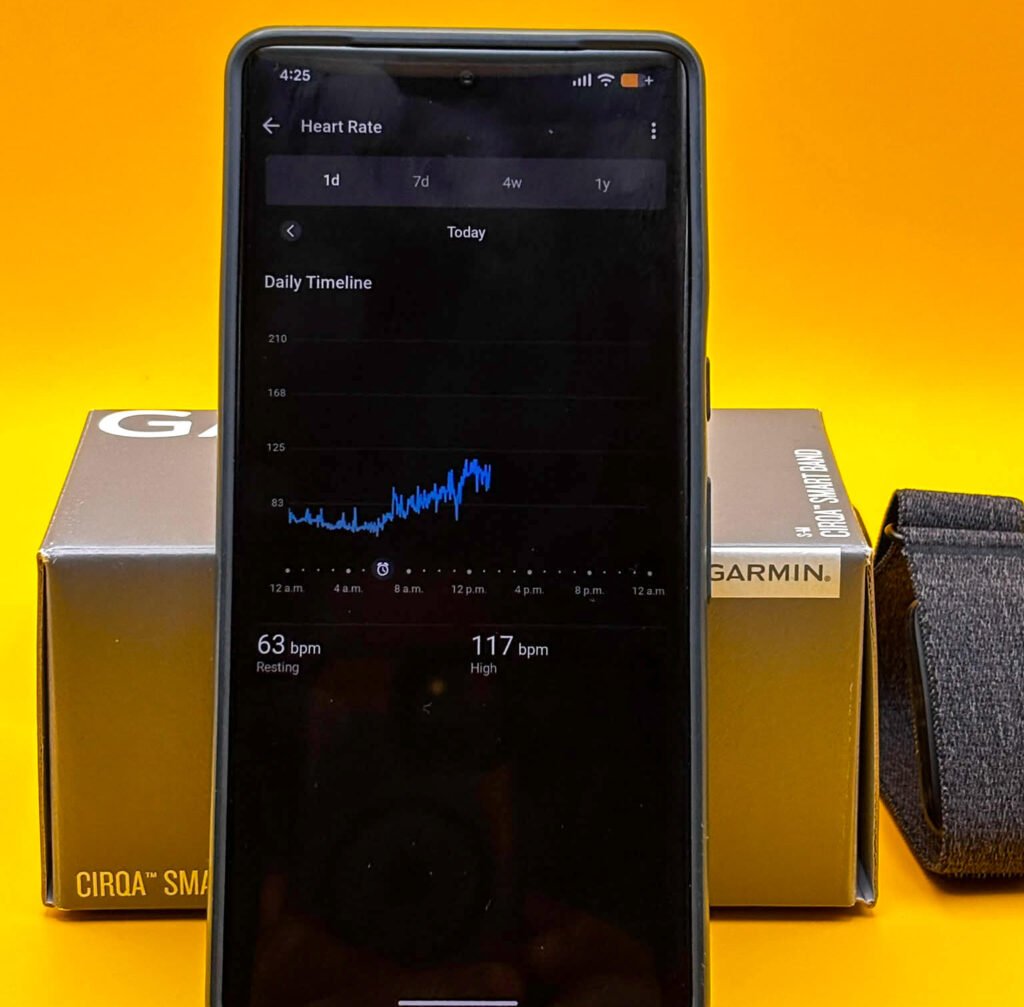
Heart-rate tracking is naturally important because so many of Garmin’s recovery and training metrics depend on reliable physiological data.
If you compare Cirqa against a Polar H10 electrical chest strap across multiple workouts. Most sessions were reportedly very close, although one strength workout produced a larger difference.
Stuff similarly reported good results across indoor cycling, strength work, classes and outdoor running, while noting the usual limitations wrist-based optical sensors can face in difficult conditions or during activities with lots of arm movement.
Those limitations aren’t unique to Cirqa.
Optical heart-rate sensors generally perform best when the device is fitted correctly and movement between the sensor and skin is minimised.
If heart-rate precision is central to your training, a chest strap still remains the safer choice for demanding sessions.
For general health, sleep, recovery and everyday training data, Cirqa appears much more convincing.
No built-in GPS
One specification needs to be understood before buying Cirqa:
There is no onboard GPS.
For outdoor routes, the tracker can use connected GPS from a compatible iPhone or Android phone. Garmin’s manual allows phone GPS to be enabled for applicable activities.
Whether this matters depends entirely on how you plan to use Cirqa.
If you already carry your phone while walking or running, connected GPS may be perfectly adequate.
If you want to leave your phone at home and still record an accurate route, pace and distance using GPS, buy a Garmin running watch instead.
For cyclists who already use a Garmin Edge computer, the missing GPS matters much less. Cirqa also supports ANT+ heart-rate broadcasting, so it can send live heart-rate data to compatible Garmin equipment such as an Edge.
That is one of the strongest ecosystem-specific arguments for the device.
Battery life
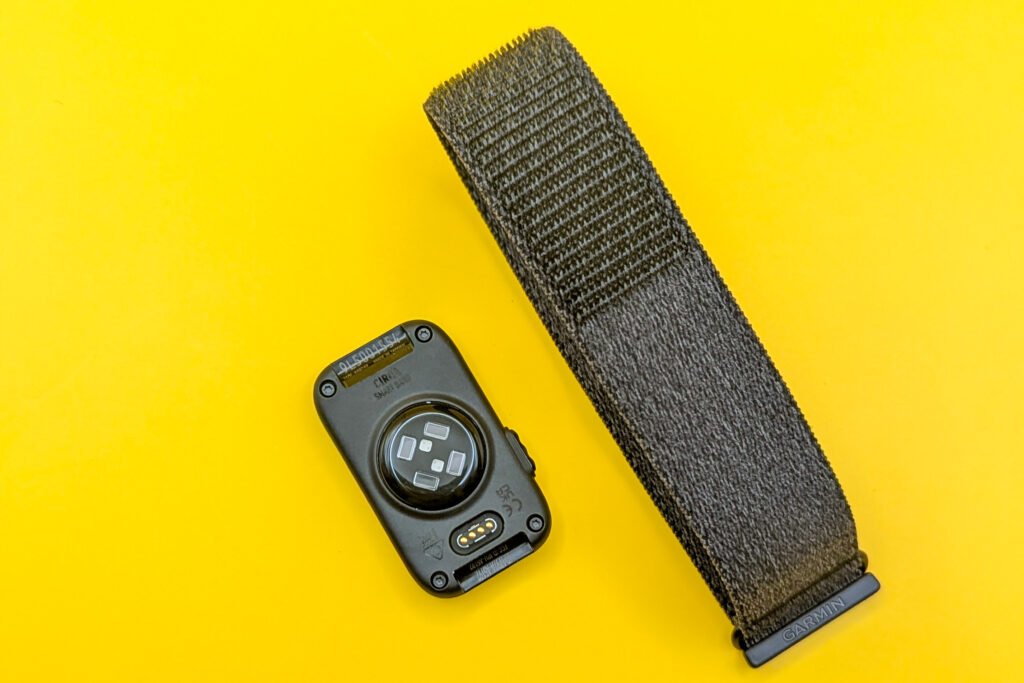
Garmin officially claims up to 10 days of battery life.
As always, “up to” is doing some work there.
Garmin’s own battery assumptions are based around approximately 30 minutes of activity per day and note that longer activity recording, Pulse Ox, additional alerts and heart-rate broadcasting can shorten endurance.
Real-world testing broadly supports expecting around a week or more depending on settings.
Garmin’s manual says a complete charge can take up to around 90 minutes, using the company’s proprietary device connector rather than plugging USB-C directly into the tracker.
For something intended to remain on your body day and night, that battery life is important.
The fewer times you remove a recovery tracker to charge it, the fewer gaps you create in the data.
The no-subscription advantage
This could be the biggest reason to choose Cirqa over Whoop.
Garmin Cirqa costs $199.99 in the US, and the essential health, sleep, activity and recovery tracking does not require an ongoing subscription.
Garmin does have Connect+, which adds premium functionality including selected coaching and AI-driven features, but it isn’t necessary to get the core Cirqa experience.
That distinction is important.
Whoop’s entire business model is based around an ongoing membership. Garmin’s proposition is more traditional: buy the hardware and continue using its primary features.
Over several years, that can make Cirqa considerably easier to justify.
The slightly awkward part is the upfront price.
At around $200, Cirqa sits close to some Garmin watches that include an actual display and GPS.
So if your reaction is, “Why wouldn’t I just buy a Garmin watch for the same money?”, that is a completely reasonable question.
The answer is that you are paying specifically not to have the watch experience.
Cirqa only makes sense if a screenless, low-distraction device is something you genuinely want.
Garmin Cirqa vs Whoop
The comparisons with Whoop are unavoidable.
Both are screenless. Both focus heavily on continuous health and recovery data. Both are designed to be worn around the clock.
But they approach the category differently.
Whoop remains more coaching-focused, building much of its experience around recovery, strain and behavioural insights.
Garmin’s advantage is its wider hardware ecosystem and the absence of a mandatory recurring subscription for Cirqa’s core features.
If you already have years of activities in Garmin Connect, own an Edge, use a Forerunner for running and understand metrics such as Body Battery or Training Readiness, moving to Cirqa is extremely easy to understand.
You aren’t changing ecosystems.
You are simply changing what sits on your wrist.
If you are starting completely from scratch and want the most polished recovery-first coaching experience possible, Whoop still deserves consideration.
If subscriptions annoy you and you already like Garmin’s health and training ecosystem, Cirqa becomes much more attractive. Stuff reached a similar conclusion, finding Whoop stronger at connecting sleep, training and recovery but acknowledging the ongoing cost of that experience.
Garmin Cirqa vs Fitbit Air
Fitbit Air attacks the category from another direction: lower hardware cost and a simpler experience.
Cirqa costs considerably more upfront, but gives you Garmin’s much deeper training ecosystem, ANT+ support, the physical activity button and close integration with other Garmin hardware.
The question therefore isn’t simply which tracker is better.
It is which ecosystem suits you.
For somebody primarily interested in steps, sleep and general wellness, Garmin’s additional training depth may be unnecessary.
For a runner or cyclist already using Garmin equipment, the extra cost becomes easier to understand.
Where Garmin Cirqa falls short
Cirqa gets a lot right, but there are several things I would think carefully about before buying it.
First, the lack of built-in GPS means serious runners will still need a phone or another Garmin device for proper outdoor tracking.
Second, there is obviously no live information on your wrist. That is the point of the product, but it also means no checking pace during a run, no maps, no glanceable sleep score and no workout instructions.
Third, Garmin Connect becomes even more important than usual. Existing Garmin users may love the depth, but newcomers can find the amount of information overwhelming.
Finally, $199.99 is not impulse-buy territory for a device with no display and no onboard GPS.
Cirqa needs to solve a specific problem for you.
If it doesn’t, a Garmin watch or cheaper fitness tracker will probably make more sense.
Who should buy Garmin Cirqa?
Buy it if you already use Garmin
- This is easily the most obvious audience. If you train with a Forerunner, Fenix or Edge but don’t want to wear a sports watch 24/7, Cirqa fills the gap extremely well.
Buy it if you dislike wearing a watch while sleeping
- Sleep and recovery data become more useful when they are consistent.
- A lighter fabric smart band is much easier to live with overnight than many full-sized sports watches.
Buy it if you want fewer distractions
- No display means no notifications and no temptation to keep checking numbers.
- Your health data is still being collected, but you decide when you want to look at it.
Buy it if you dislike subscription-based wearables
- Core Cirqa tracking works without a mandatory monthly or annual plan.
Who should skip it?
Skip it if Cirqa would be your only serious running device
- No onboard GPS and no live pace information make a proper running watch considerably more useful for structured training.
Skip it if you constantly want live metrics
- Cirqa intentionally delays feedback.
- If checking pace, heart rate, maps or notifications from your wrist is important, the absence of a screen will quickly become frustrating.
Skip it if you just want inexpensive basic tracking
- There are cheaper screenless fitness trackers available.
- Cirqa’s price makes the most sense when you actually benefit from Garmin’s deeper ecosystem.
Skip it if you already happily wear your Garmin 24/7
- If your existing Garmin watch is comfortable during work, sleep and training, Cirqa will duplicate a lot of information you are already collecting.
Garmin Cirqa review: Final verdict
The Garmin Cirqa is interesting precisely because it doesn’t try to do everything.
Garmin already sells watches capable of mapping mountain trails, guiding interval workouts, tracking races and showing dozens of metrics directly on your wrist.
Cirqa removes almost all of that interaction.
What remains is the part many people actually want from a wearable throughout most of the day: health data, sleep tracking, recovery information and background activity monitoring.
And I think that is the key to understanding it.
This isn’t a Garmin watch replacement.
It is an alternative way of wearing Garmin.
For runners, I particularly like the idea of separating tracking from feedback. Use a Forerunner when the workout matters and you need pace, GPS or structured intervals. Use Cirqa when you just want to run, recover, sleep and continue feeding useful information into Garmin Connect.
There are compromises. The lack of onboard GPS limits its standalone sports credentials. Garmin Connect may feel overwhelming for new users. Automatic workout detection still has room to improve, and at $199.99 the hardware isn’t cheap.
But the combination of comfortable 24/7 wear, strong health and recovery tracking, ANT+ integration, roughly week-plus real-world battery life and no mandatory subscription gives Cirqa a very clear place in Garmin’s ecosystem.

Prateek is the founder of Athletico, a Toronto-based running community of over 90,000+ running enthusiasts. A lifelong running gear nerd, Prateek has been testing and reviewing running shoes since 2021, with a focus on honest, real-world performance rather than marketing hype.
With 20+ 10K races, four half marathons, and 2 full marathons, Prateek brings both experience and curiosity to every review. From daily trainers to race-day shoes, each product is tested on the road, track, and long runs because the best insights come from miles, not spec sheets.
Through in-depth reviews and practical buying guides, Prateek helps runners make smarter choices about their gear, train with confidence, and enjoy the process of running a little more.