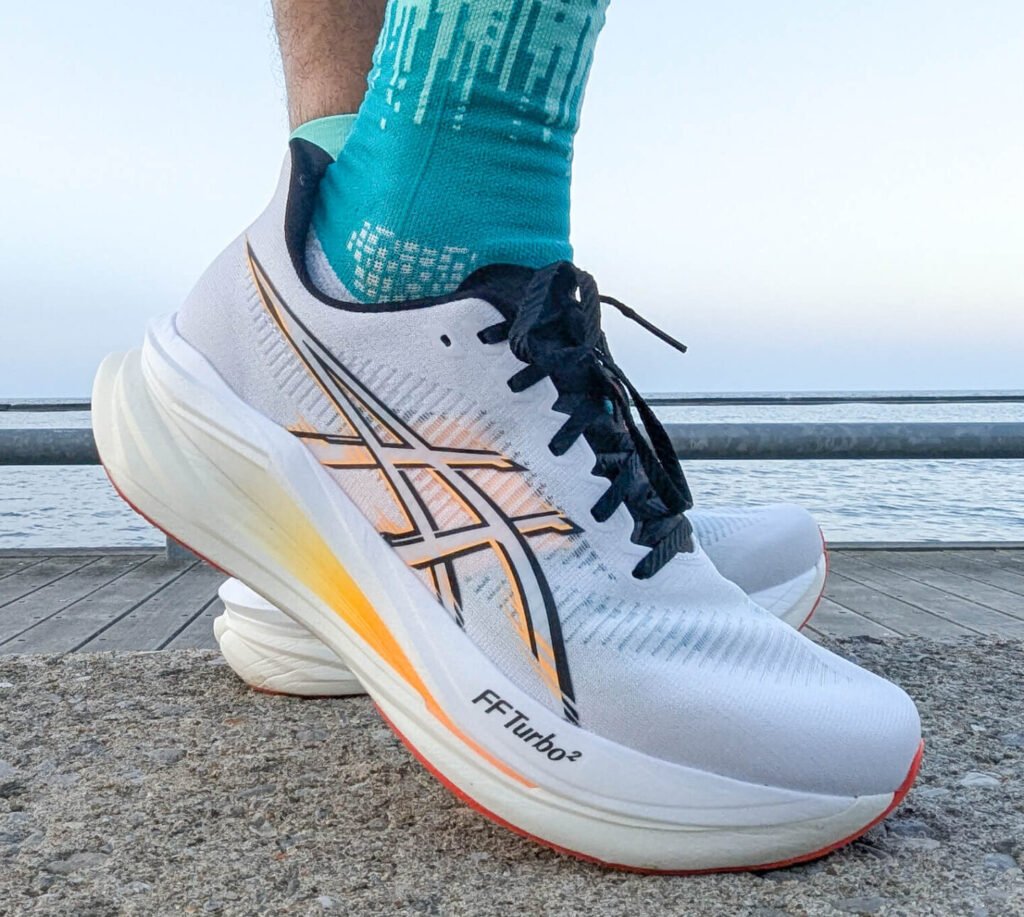

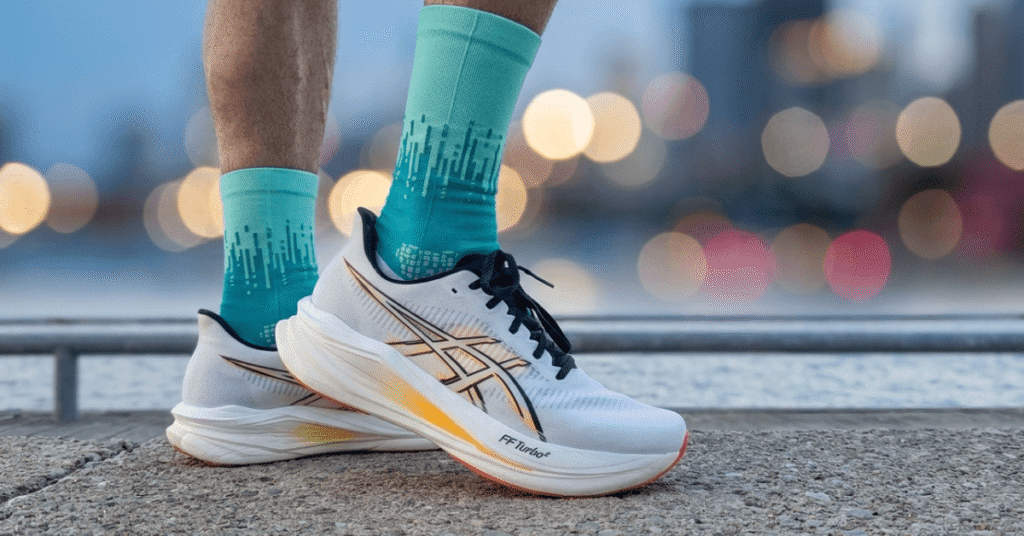
The original ASICS Sonicblast entered the Blast family as a high-stack, plated training shoe designed to handle everything from daily mileage to faster workouts. It offered plenty of cushioning, a stable platform and a controlled form of propulsion that made it more forgiving than a traditional carbon-plated racing shoe.
With the Sonicblast 2, ASICS has not completely changed that formula. Instead, it has focused on the areas that needed refinement. The shoe is lighter, the upper is more breathable, the plate has been redesigned and the forefoot now delivers a stronger sense of bounce.
After running around 30 kilometres in the Sonicblast 2, and having extensively used the original Sonicblast, I see this as a meaningful upgrade. It feels more polished, smoother through transitions and noticeably more enjoyable when the pace begins to increase.
However, it is not automatically the best option for every runner. Here is everything you need to know before buying it.
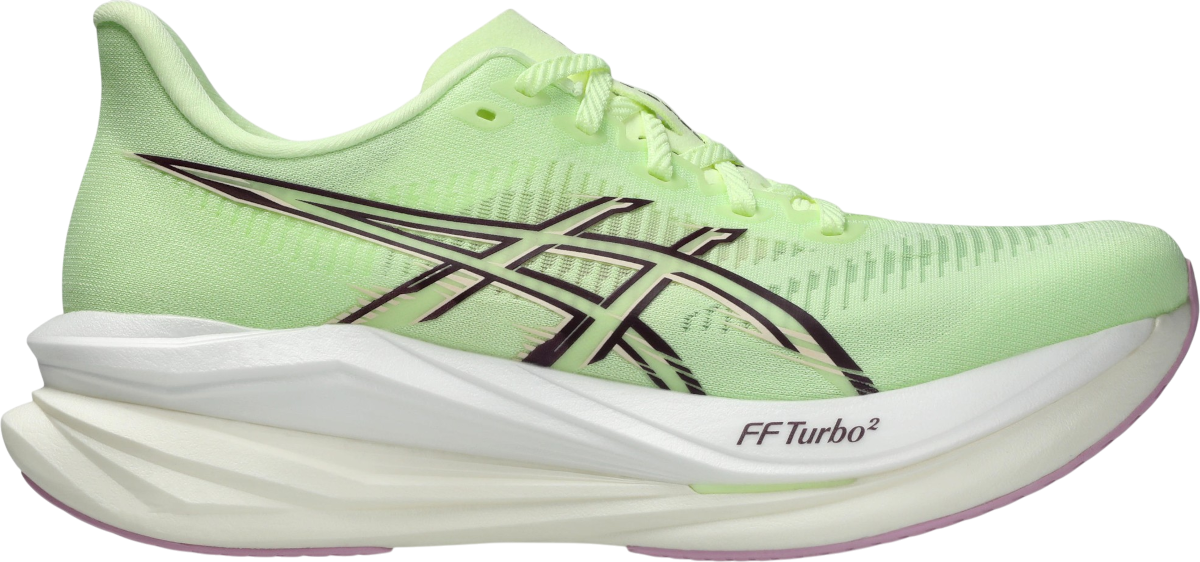
- Lighter than the original
- Smooth and responsive ride
- Great for faster long runs
- Higher price than before
- Snug fit for wide feet
A lighter, more refined plated super trainer built for tempo runs, faster long runs, and daily training with some pace. It feels smoother, more responsive, and less rigid than the original.
Where the Sonicblast fits within the ASICS Blast series
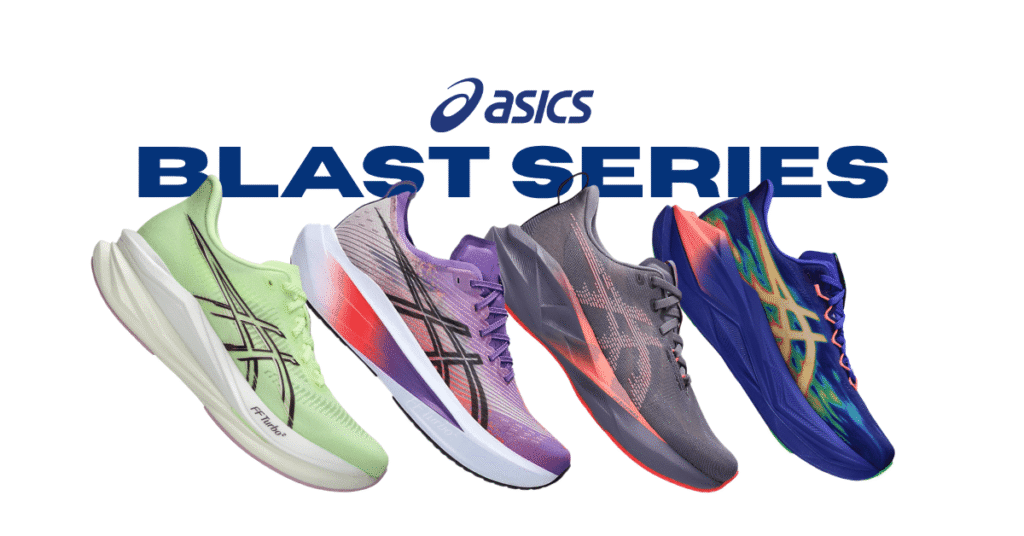
The ASICS Blast series now covers several different running experiences.
The Novablast is the accessible daily trainer of the family. It is soft, energetic and comfortable enough for regular mileage without using a plate.
The Superblast is designed around lightweight cushioning and long-distance versatility. It offers a high stack and an efficient ride without relying on a plate.
The Megablast focuses heavily on bounce and energy return through its premium foam construction.
The Sonicblast is the plated option. ASICS describes the ASTROPLATE as technology unique to the Sonicblast franchise within the Blast family. Its purpose is to add mechanical propulsion while retaining enough flexibility for regular training.
That places the Sonicblast 2 between a conventional daily trainer and an aggressive racing shoe. It has more structure and propulsion than a Novablast, but it is more forgiving and training-friendly than a dedicated carbon-plated racer.
What is new in the ASICS Sonicblast 2?
The Sonicblast 2 is an evolutionary update, but several changes work together to create a noticeably different experience.
| Specification | ASICS Sonicblast 2 |
|---|---|
| Category | Plated super trainer |
| Surface | Road |
| Support | Neutral |
| Men's weight | 242 grams in a US men's size 9 |
| Men's stack height | 46 mm heel and 38 mm forefoot |
| Heel to toe drop | 8 mm |
| Midsole | FF TURBO SQUARED and FF BLAST MAX |
| Plate | Forked Pebax ASTROPLATE |
| Upper | Engineered mesh |
| Outsole | ASICSGRIP rubber |
| US launch price | $190 |
| Best for | Tempo runs, progression runs, intervals and faster daily training |
A lighter overall construction
The original men’s Sonicblast weighed approximately 256 grams in a US size 9. The Sonicblast 2 weighs 242 grams in the same reference size, resulting in an approximate reduction of 14 grams.
The difference might not sound enormous on paper, but it is noticeable in a high-stack shoe. The Sonicblast 2 feels less bulky when accelerating, changing pace or running at a quicker cadence.
Importantly, ASICS achieved this reduction without lowering the stack height. The men’s version still measures 46 mm in the heel and 38 mm in the forefoot, maintaining the same 8 mm drop.
A redesigned forked ASTROPLATE
The most important structural change is the new forked ASTROPLATE.
The original Sonicblast used a more conventional Pebax plate positioned through the midsole. In the Sonicblast 2, that plate has been redesigned with a forked shape through the forefoot.
This change serves two purposes. First, it reduces the amount of plate material, contributing to the lower weight. Second, it creates more space for FF TURBO SQUARED foam to extend through the midsole and into the new forefoot trampoline pod.
The plate is made from Pebax, not carbon fibre. This distinction matters because the Sonicblast 2 does not deliver the extremely rigid or aggressive sensation associated with many carbon-plated racing shoes. The Pebax plate allows more flexibility, making the shoe easier to use during everyday trainin
A new FF TURBO SQUARED trampoline pod
The midsole still combines FF TURBO SQUARED with FF BLAST MAX, but the geometry has changed.
The Sonicblast 2 now uses a dedicated FF TURBO SQUARED trampoline pod in the forefoot. This concentrated section of responsive foam is designed to amplify the sensation of bounce during toe-off.
Instead of simply making the entire shoe softer, ASICS has placed the more energetic sensation where it can contribute most during faster running. The result is a forefoot that feels more responsive when pressure is applied through the final stage of the stride.
A more breathable engineered mesh upper
ASICS has also revised the upper with a new engineered mesh construction.
The updated material feels lighter and more open than the upper on the original Sonicblast. It reduces the slightly dense sensation of the first version and allows more air to move through the shoe.
This is an especially useful improvement for longer workouts, warm-weather running and sessions where the pace causes more heat to build around the foot.
ASICS says the new upper was developed to improve both breathability and comfort, while reducing the need for unnecessary overlays.
Upper
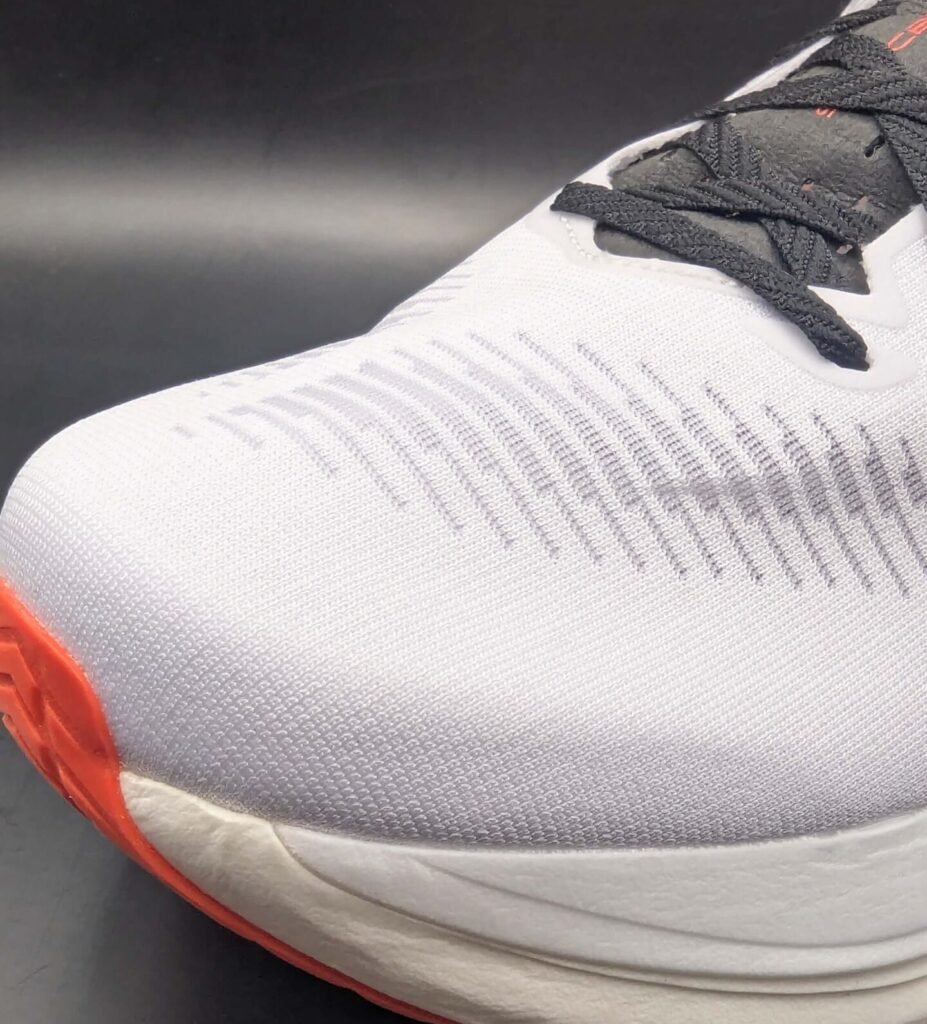
The Sonicblast 2 has a performance-oriented upper without feeling excessively minimal.
The engineered mesh is reasonably thin, flexible and more breathable than the material used in the original shoe. ASICS has kept the number of overlays under control, helping the upper conform to the foot while contributing to the weight reduction.
The midfoot hold is secure, which is important in a shoe intended for tempo runs and intervals. The foot does not feel disconnected from the platform when cornering or increasing the pace.
The tongue and heel construction provide enough comfort for daily training without adding the thick padding normally found in a relaxed mileage shoe. The heel hold is secure, and I did not find the structure intrusive during my initial testing.
This is still a relatively streamlined fit rather than a spacious one. Runners with average-width feet should find it comfortable in their normal size, but runners with particularly wide feet or a high-volume midfoot should try it on before purchasing.
Overall, the upper is one of the most useful improvements. It makes the Sonicblast 2 feel more like a modern performance trainer and less like a large daily shoe with a plate added inside it.
Midsole
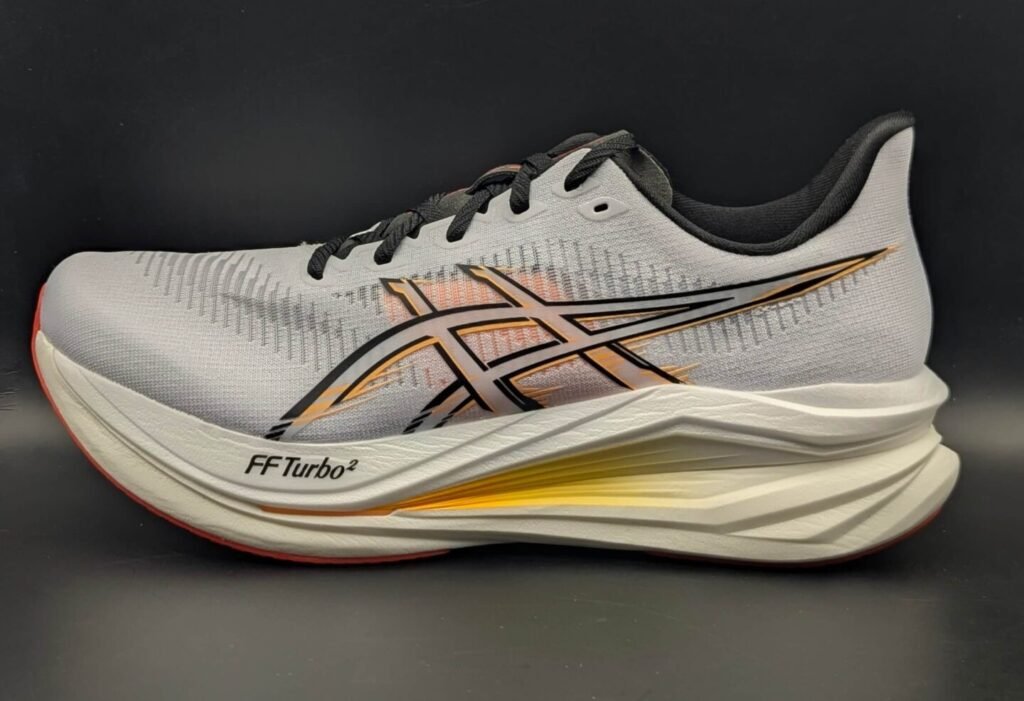
The midsole is where the Sonicblast 2 separates itself from most conventional daily trainers.
It uses two different ASICS foams. FF BLAST MAX provides cushioning and impact protection, while FF TURBO SQUARED contributes more energy return and a livelier sensation.
The two foams work together to create a balanced ride. The shoe is cushioned, but it is not extremely soft or unstable. There is enough firmness and structure to give the runner a platform to push against when the pace increases.
The FF TURBO SQUARED trampoline pod adds a more concentrated bounce underneath the forefoot. This becomes easier to notice during tempo running, progression runs and sustained efforts. At slower speeds, the sensation is more controlled. Once more force is applied through the forefoot, the shoe begins to feel livelier.
The forked ASTROPLATE supports this movement without making the shoe feel excessively rigid. Instead of producing an abrupt snap, it helps guide the foot forward and creates a smoother transition into toe-off.
This is one of the major differences between the Sonicblast 2 and an aggressive racing shoe. The plate assists the stride, but it does not dominate it.
Outsole
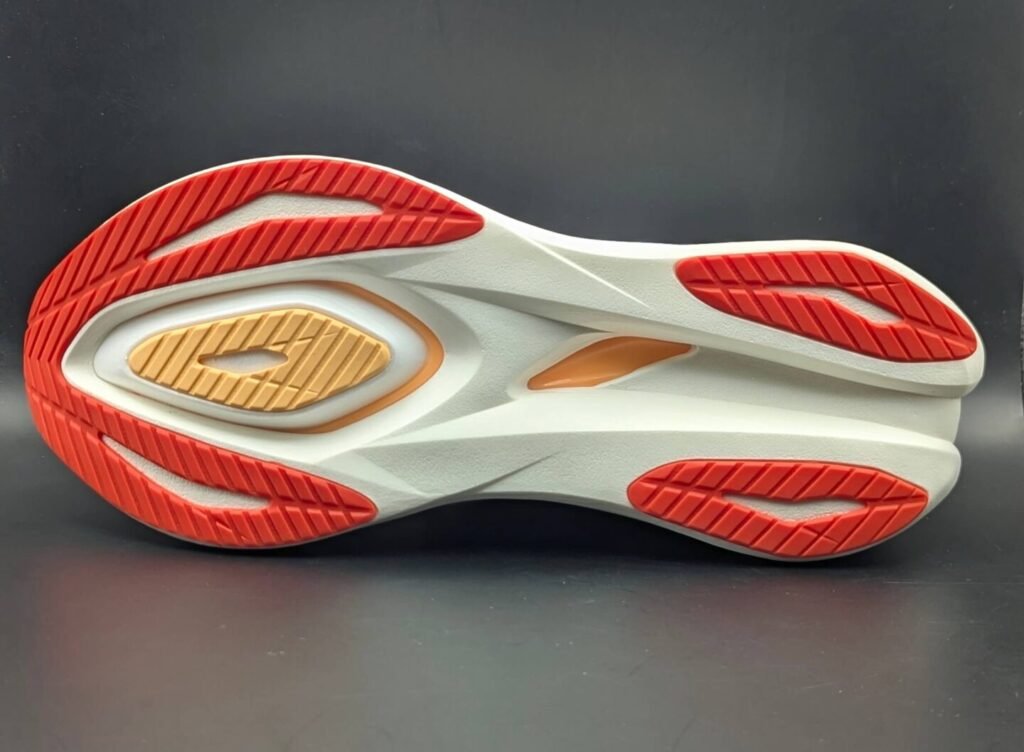
ASICS continues to use ASICSGRIP rubber on the Sonicblast 2.
The outsole has strategically placed rubber across the main landing and toe-off areas. This provides dependable traction without covering the entire bottom of the shoe in heavy rubber.
Grip is strong on regular roads, pavements and other paved surfaces. The rubber also helps maintain confidence when running at faster paces, especially through corners or on roads that are slightly damp.
There is exposed foam in some areas, so this is not a shoe I would regularly take onto technical trails or rough gravel. It can manage short sections of light, well-maintained paths, but its design is clearly optimized for road running.
My testing distance is not yet enough to make a definitive long-term durability judgment. So far, however, the outsole is behaving as expected, with no unusual deterioration. A complete durability verdict will require substantially more mileage.
Fiting and Sizing
The Sonicblast 2 fits true to size in length for me.
The heel and midfoot are secure, which gives the shoe the lockdown required for faster workouts. The toe box provides adequate room for a performance trainer, but it is not particularly wide or rounded.
Compared with the original Sonicblast, the upper feels more accommodating because the mesh is lighter and more flexible. This does not necessarily make the platform itself significantly wider, but it reduces some of the restrictive sensation of the first version.
I would recommend staying with your normal ASICS running-shoe size if you have an average-width foot.
Wide-footed runners should be more cautious. The shoe is currently presented in a standard-width performance fit in many markets, and the midfoot may feel snug on higher-volume feet.
How does the ASICS Sonicblast 2 ride?
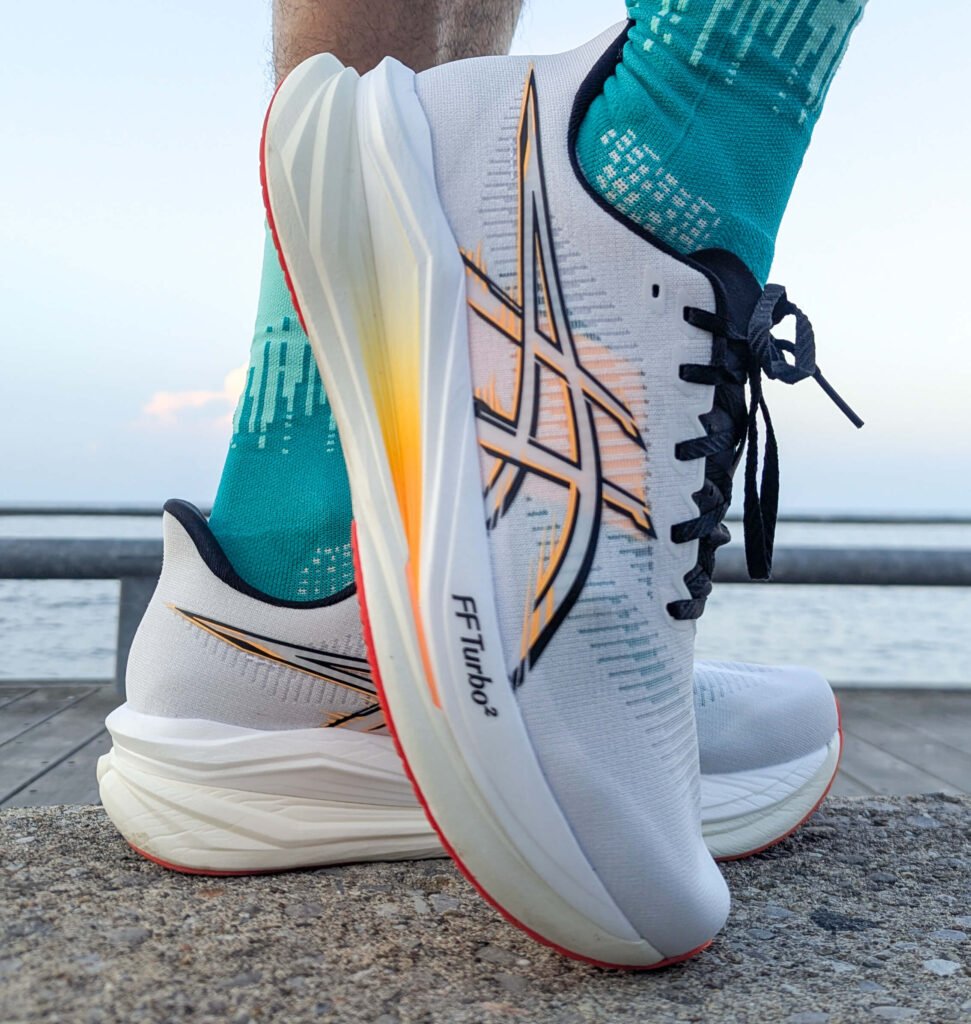
The Sonicblast 2 delivers its best experience when the run includes some pace.
At an easy pace, the shoe feels cushioned and stable. The high stack protects the legs, while the broad platform and plate prevent the foam from feeling uncontrolled. It can handle daily mileage, particularly if your easy pace is naturally steady rather than extremely slow.
However, this is not where the shoe is most exciting.
When the pace increases, the forefoot trampoline pod and forked plate begin to work together more effectively. The transition becomes smoother, and the shoe produces a stronger sense of forward movement.
The weight reduction also helps. The original Sonicblast could occasionally remind you that it was a large, plated trainer. The second version feels less cumbersome and easier to turn over.
The ride is energetic without being overly aggressive. It does not have the sharp toe-off or rigid sensation of a full carbon racing shoe. Instead, it provides a rolling, springy transition that feels sustainable over longer workouts.
I found it particularly suitable for:
- Tempo runs
- Progression runs
- Cruise intervals
- Marathon-pace workouts
- Long runs containing faster sections
- Steady daily runs
- Road intervals
For very slow recovery runs, I would still choose something softer and more flexible. The Sonicblast 2 can run slowly, but its geometry and plate make more sense when the runner is applying enough force to activate the forefoot.
ASICS Sonicblast 2 versus Sonicblast 1
| Feature | Sonicblast | Sonicblast 2 | What the change means |
|---|---|---|---|
| Men's weight | 256 grams | 242 grams | The second version feels less bulky and easier to accelerate |
| Stack height | 46 mm and 38 mm | 46 mm and 38 mm | Cushioning volume remains unchanged |
| Drop | 8 mm | 8 mm | Overall foot position remains familiar |
| Plate | Standard Pebax ASTROPLATE | Forked Pebax ASTROPLATE | Smoother and more flexible forefoot propulsion |
| Midsole | FF TURBO SQUARED and FF BLAST MAX | Same foams with an FF TURBO SQUARED trampoline pod | More concentrated bounce under the forefoot |
| Upper | More structured mesh construction | New engineered mesh | Improved breathability and a lighter feel |
| Outsole | ASICSGRIP | ASICSGRIP | Traction remains one of the shoe's strengths |
| US launch price | $180 | $190 | The second version costs $10 more |