

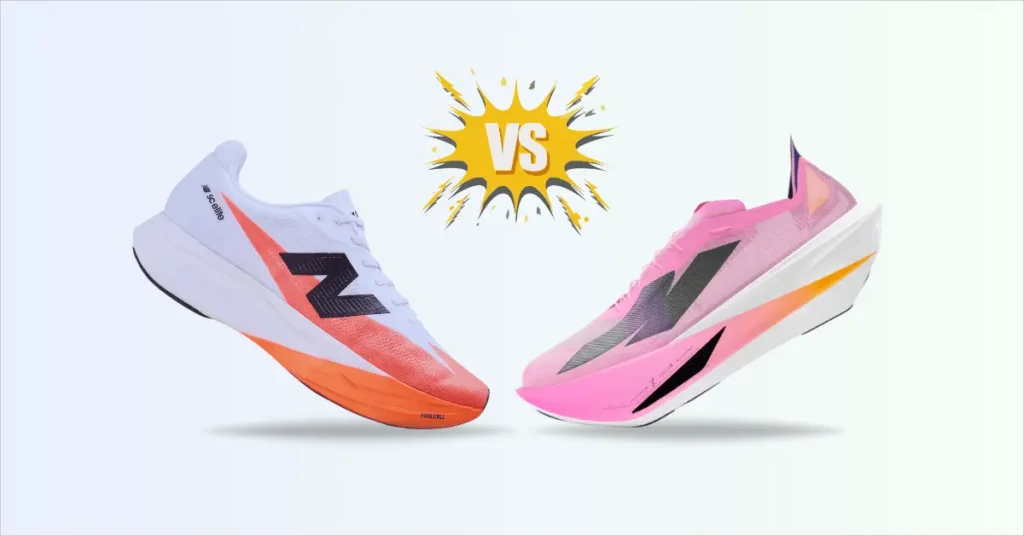
New Balance has taken Decathlon to court over the logo on its Kiprun running shoes, and the outcome could decide whether a fast-growing line of budget-friendly racers keeps its branding, changes it, or comes off shelves in the United States altogether.
The complaint was filed on September 15, 2026 in the U.S. District Court for the District of Massachusetts, where New Balance is headquartered. At the centre of it is a single letter, and whether or not you can tell which one it is.
What New Balance is actually claiming
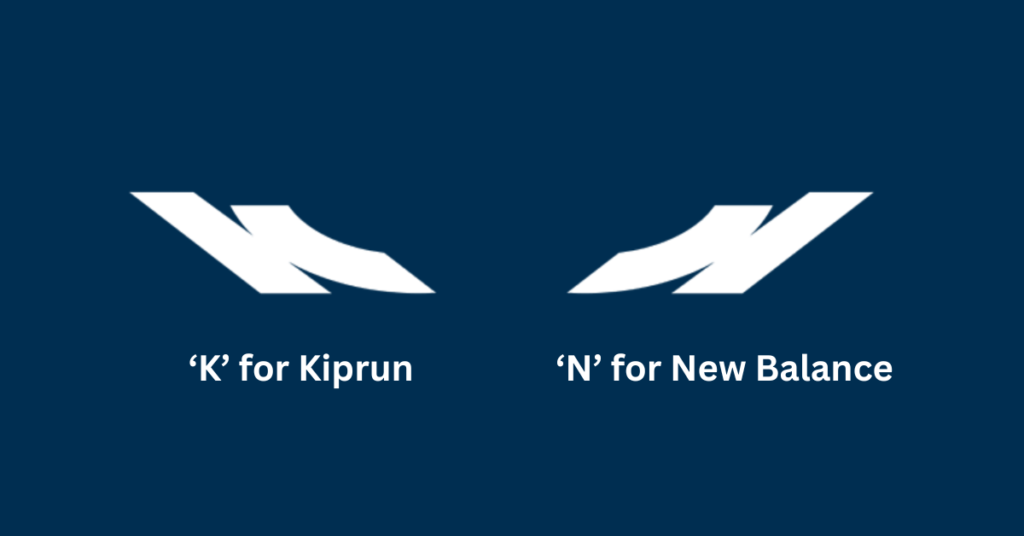
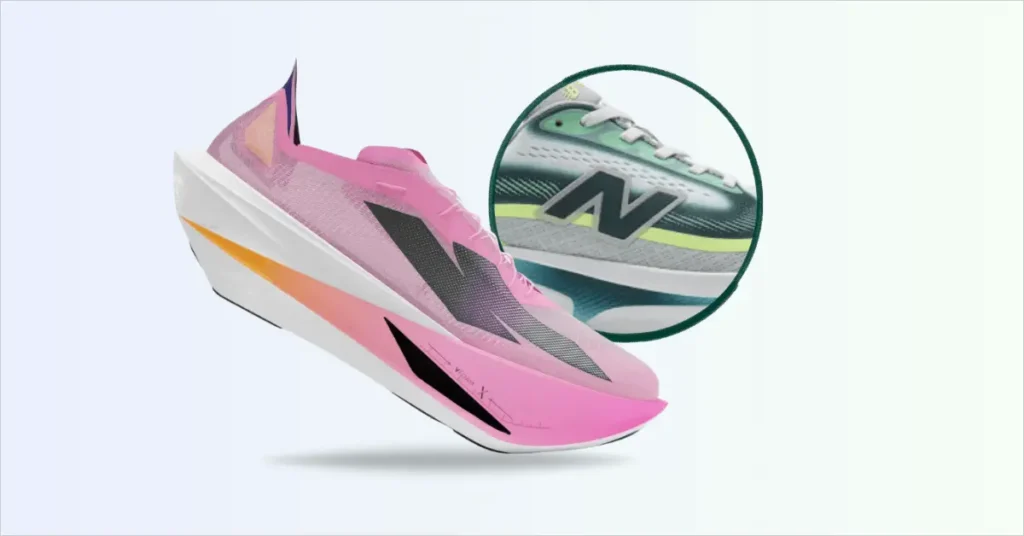
New Balance says the Kiprun logo infringes its “N” trademarks, which it has used on footwear since the 1970s. That mark is one of the most protected assets in running: a large, angled letter placed across the midfoot of the shoe, visible from three metres away.
Decathlon’s position is that the Kiprun logo is a stylised “K,” which is how the brand has described it since the identity launched. New Balance’s argument is about what happens when you look at it the other way around. Flip the Kiprun mark to its mirror image, the complaint contends, and what you get reads as an “N” on the side of a running shoe.
The company argues the risk of confusion is highest in the place most runners now see shoes for the first time: a cropped product image in a social feed or a marketplace listing, with no box, no wordmark and no surrounding context to tell you whose shoe it is.
New Balance also points to consumer behaviour as evidence. The complaint cites numerous examples of shoppers publicly noting the resemblance on social media, the argument being that if runners themselves keep raising it unprompted, the confusion is not hypothetical.
The eight shoes named
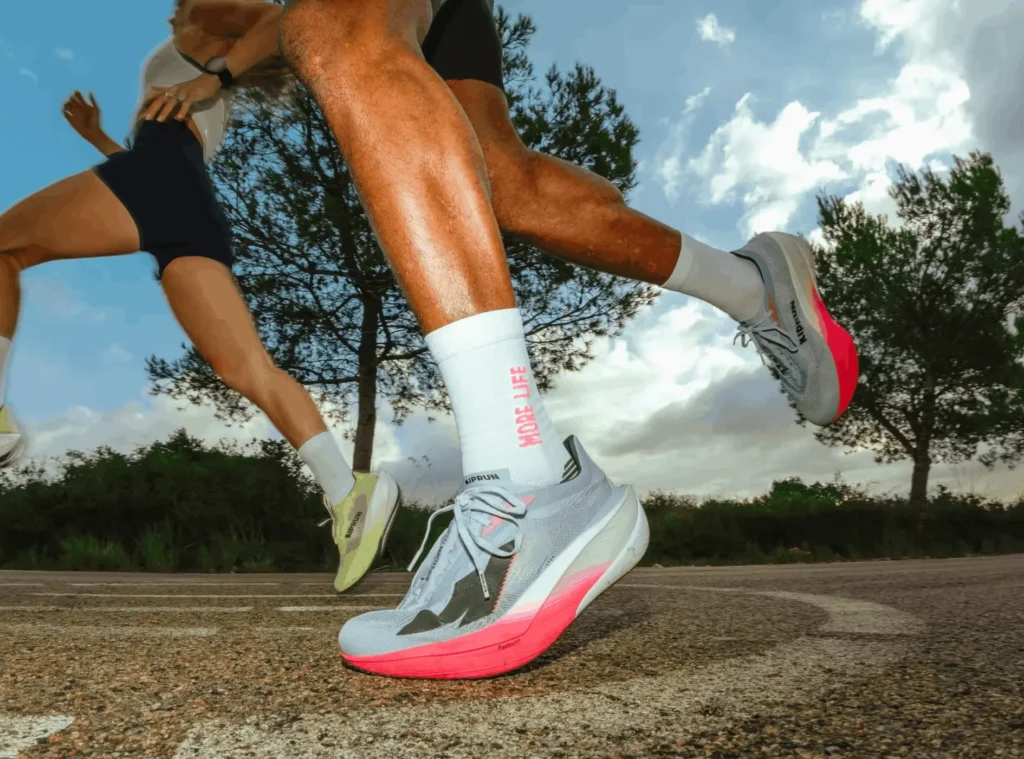
The filing identifies eight Kiprun models carrying the disputed logo. The most prominent is the Kipstorm Lab, Kiprun’s US$350 carbon-plated super shoe, which puts it in direct competition with New Balance’s own top-tier racer, the FuelCell SuperComp Elite v6.
That overlap matters legally. Trademark confusion claims are stronger when the products sit in the same category at a comparable price point and are sold through the same channels, because a shopper is plausibly choosing between them. A $350 carbon racer competing with a $250 to $280 carbon racer is a much easier confusion argument than a running shoe against a handbag.
Kiprun’s broader US range, launched in April 2026, spans the Kipride Max at US$160, the Kipstorm Elite at US$250 and the Kipsummit Max trail shoe at US$150. The brand sells through Decathlon.com and a growing list of specialty running retailers.
This did not come out of nowhere
New Balance first contacted Decathlon about the logo in January 2026, roughly three months before Kiprun’s formal US launch. Eight months passed between that first contact and the lawsuit.
That gap tells you something about how these disputes usually go. Brands send a letter, lawyers exchange positions, and the two sides try to land on a compromise: a redesign, a licence, a geographic carve-out. A complaint filed in federal court means that process ran out of road.
What New Balance is asking the court for
Three things, and the first is the one that matters to anyone with a Kiprun purchase in mind:
- A recall of products bearing the disputed mark
- Destruction of infringing goods
- Monetary damages, with the amount to be set by a jury
A recall request is aggressive, and it is worth being clear that asking for one is not the same as getting one. Courts grant that kind of relief sparingly, and cases at this stage far more often end in a negotiated redesign than in shoes being pulled and destroyed. Still, it signals that New Balance wants the logo off the market rather than licensed.
Why New Balance is not bluffing
The “N” has been litigated repeatedly, and New Balance has a strong record defending it:
- 2017: won a landmark case in China against copycat operations, with damages reported around US$1.5 million
- 2019: prevailed against USA New Bunren International
- 2021: brought a claim against Michael Kors over “N”-marked footwear
- Later actions against New Barlun produced a reported US$3.85 million award, and the company has pursued Golden Goose over footwear design
A company that has spent a decade suing over slanted letters on shoe midfoot panels is not a company likely to let this one slide.
The other side of the argument
Decathlon has a real defence, and it is not just “it’s a K.”
The Kiprun identity was unveiled in April 2025 as part of a full rebrand, with the mark explicitly designed around the shape of track starting blocks and the brand shortened to a single “K.” That gives Decathlon a documented, independent design rationale, which is useful against any suggestion the logo was reverse-engineered from a competitor’s mark.
There is also the mirror-image problem. New Balance’s argument requires the viewer to flip the mark before the resemblance appears. Decathlon can reasonably ask why a consumer would encounter the logo reversed, and courts assess confusion based on how a mark is actually presented in the marketplace, not how it looks under transformation.
Reasonable people can land on either side of this, which is exactly why it is being heard by a jury rather than settled over email.
What happens next
Decathlon will file a response, and from there the case follows the standard path: motions, discovery, and a long stretch where very little becomes public. Most trademark disputes of this shape settle before a jury ever sees them.
The realistic outcomes, roughly in order of likelihood: a negotiated redesign or modification of the mark, a licensing arrangement, dismissal or settlement on undisclosed terms, or a jury verdict. A courtroom conclusion is the least likely of the four, and also the slowest. Expect this to run well into 2027.
The wider story is the one worth watching. A French retailer’s in-house brand has moved from value-market trainers to a US$350 record-setting carbon racer sold alongside the majors in specialty stores. Trademark letters from incumbents tend to arrive at exactly that point in a challenger brand’s growth. The lawsuit is, in an awkward way, a measure of how seriously Kiprun is now being taken.
Frequently Asked Questions
Why is New Balance suing Decathlon?
New Balance alleges that the logo on Decathlon’s Kiprun running shoes infringes its trademarked “N” mark, which it has used on footwear since the 1970s. The complaint was filed on September 15, 2026 in the U.S. District Court for the District of Massachusetts.
Is the Kiprun logo a “K” or an “N”?
Decathlon designed and describes it as a stylised “K,” based on the shape of track starting blocks, introduced in Kiprun’s April 2025 rebrand. New Balance argues that the mark’s mirror image reads as an “N” when seen on the side of a shoe, particularly in cropped online product images.
Which Kiprun shoes are named in the lawsuit?
The complaint identifies eight Kiprun models, including the Kipstorm Lab, the brand’s US$350 carbon-plated racing shoe.
Will Kiprun shoes be recalled?
New Balance has requested a recall, destruction of infringing goods and monetary damages. A request is not an outcome. Courts grant recalls rarely, and disputes like this more commonly end in a logo redesign or a settlement.
Can I still buy Kiprun shoes?
Yes. Kiprun shoes remain on sale, and no court has restricted their sale. Shoes already purchased are unaffected.
Has New Balance won trademark cases before?
Repeatedly. It has prevailed in actions in China with damages reported at roughly US$1.5 million in 2017 and US$3.85 million against New Barlun, won against USA New Bunren International in 2019, and brought claims against Michael Kors and Golden Goose over footwear marks and designs.

Prateek is the founder of Athletico, a Toronto-based running community of over 90,000+ running enthusiasts. A lifelong running gear nerd, Prateek has been testing and reviewing running shoes since 2021, with a focus on honest, real-world performance rather than marketing hype.
With 20+ 10K races, four half marathons, and 2 full marathons, Prateek brings both experience and curiosity to every review. From daily trainers to race-day shoes, each product is tested on the road, track, and long runs because the best insights come from miles, not spec sheets.
Through in-depth reviews and practical buying guides, Prateek helps runners make smarter choices about their gear, train with confidence, and enjoy the process of running a little more.