

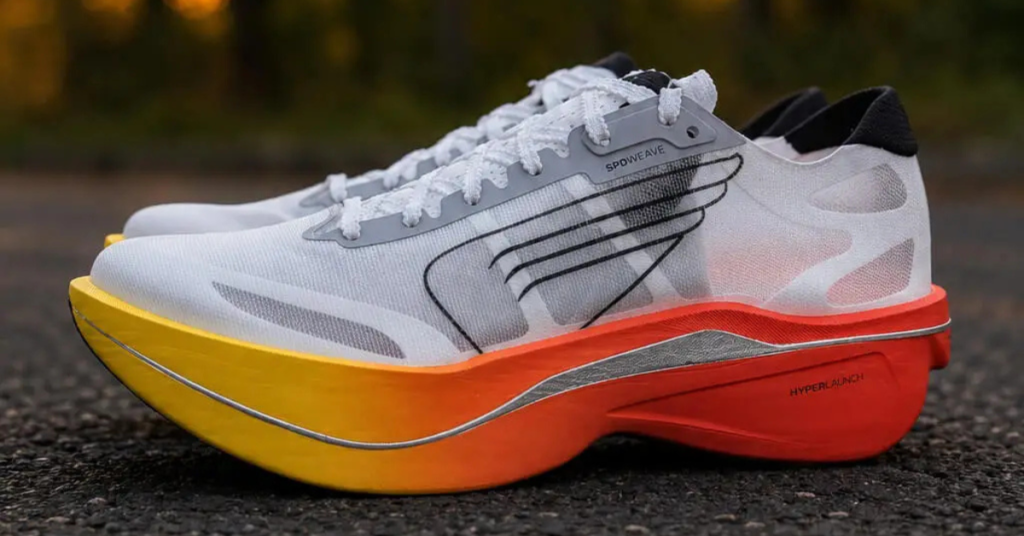
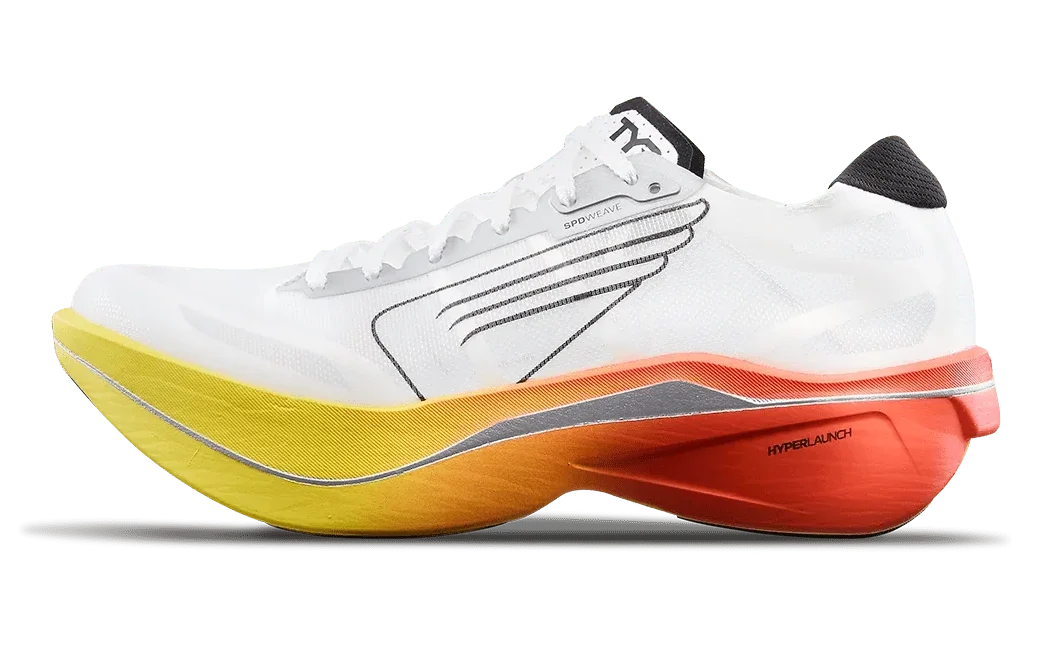
The Valkyrie Elite 2 is the first shoe TYR has made that I would genuinely pin a race number on. It weighs about 150g in a men’s US 9, sits on 40mm of supercritical A-TPU foam, runs a full-length carbon plate through the middle of it, and costs $280. On paper that is a top-tier super shoe spec sheet. On the road it backs it up.
What surprised me most is not the weight. It is how usable the shoe is. Plenty of racers in this category punish you the moment your form falls apart or your pace drops out of the target window. This one does not. It looks far more aggressive than it feels, and that combination of a genuinely light, genuinely fast platform that still lets you shuffle home at the back end of a long effort is rare.
It is not perfect. The fit is lean and unforgiving if you have a wide or high-volume foot, the heel is scooped out to save weight, and $280 is real money for a brand most runners still associate with swim gear. But if you race between 5K and the half marathon and you care about grams, this deserves a place on your shortlist.
- Exceptionally lightweight
- Excellent grip for such low weight
- Natural, responsive carbon plate ride
- Narrow, unforgiving fit
- Limited heel protection for heel strikers
- Heel collar may irritate Achilles
The TYR Valkyrie Elite 2 is a seriously fast, remarkably light super shoe that manages to feel aggressive without being intimidating. Perfect for 5K to half marathon.
How much has changed since the first Valkyrie Elite Carbon
Almost everything. It is worth being blunt about this, because the original Valkyrie Elite Carbon is the reason a lot of runners never took TYR seriously as a road brand. It arrived at a moment when simply having a carbon plate was still enough to be interesting, and it was fine. It was also heavy, firm by modern standards, and comfortably outgunned by every mainstream racer released alongside it. Most people who owned a pair did not race in it.
The second version is not an update to that shoe. It is a different shoe wearing the same name. The old model weighed around 240g. This one is roughly 90g lighter, which is the single largest generational weight drop I can think of in this category. The foam has been swapped for a full supercritical A-TPU compound. The geometry has been rebuilt around a decoupled heel and forefoot with a deep midfoot cut-out. The upper has gone from conventional engineered mesh to a translucent race skin with almost nothing to it.
If you tried the first one and wrote the brand off, that judgement no longer applies.
TYR Valkyrie Elite 2
Full specification sheet
| Specification | TYR Valkyrie Elite 2 |
|---|---|
| Price | $280 USD |
| Weight | About 150g / 5.3oz (men's US 9). |
| Stack height | 40mm heel / 34mm forefoot |
| Drop | 6mm |
| Midsole | Hyperlaunch, 100% supercritical A-TPU, dual-layer |
| Plate | Full-length carbon fibre plate, sandwiched between the foam layers |
| Upper | SPDWeave engineered mesh, translucent with an iridescent finish |
| Outsole | Rubber, heavy forefoot coverage, minimal under the heel |
| Support | Neutral |
| Fit | Runs snug through the midfoot and toe box |
| Best distances | 5K, 10K, half marathon; marathon for efficient forefoot and midfoot strikers |
The Hyperlaunch midsole: what 100% supercritical A-TPU actually feels like
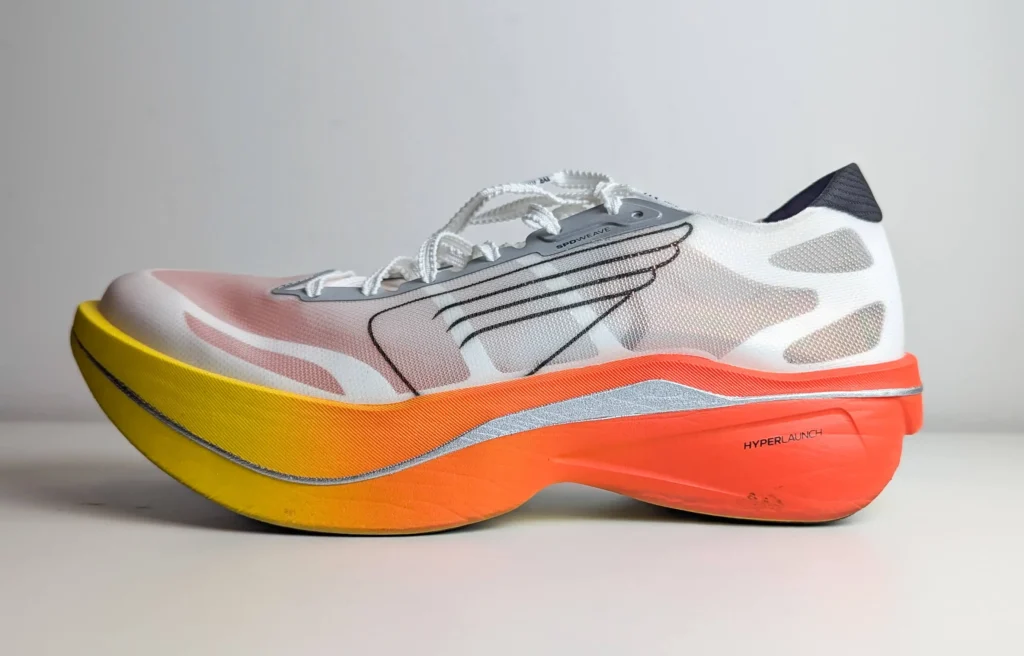
Hyperlaunch is TYR’s name for the foam, and the marketing claim is 90% energy return with 50% more cushioning than the previous generation. Take the percentages with the usual pinch of salt, but the character is real and it is distinctive.
This is a soft-leaning super foam rather than a firm, snappy one. Press a thumb into the forefoot and it gives easily. Step in and it feels plush in a way that a 150g shoe has no business feeling. Where it separates itself from genuinely soft trainers is that it does not keep collapsing. There is a floor to it, and once you find that floor it pushes back.
The defining quality is that the shoe scales with effort. At easy pace it is comfortable and fairly unremarkable, which honestly is a compliment for a racer this light. As you load it harder, more comes back. That relationship between input and return is the thing I kept noticing across [XX] sessions: the shoe felt best when I asked the most of it, and it never felt like it was doing the work in a way that disguised what my legs were actually doing.
Two layers of that foam sit either side of the plate, which is part of why the ride reads as cushioned rather than harsh.
The carbon plate and geometry
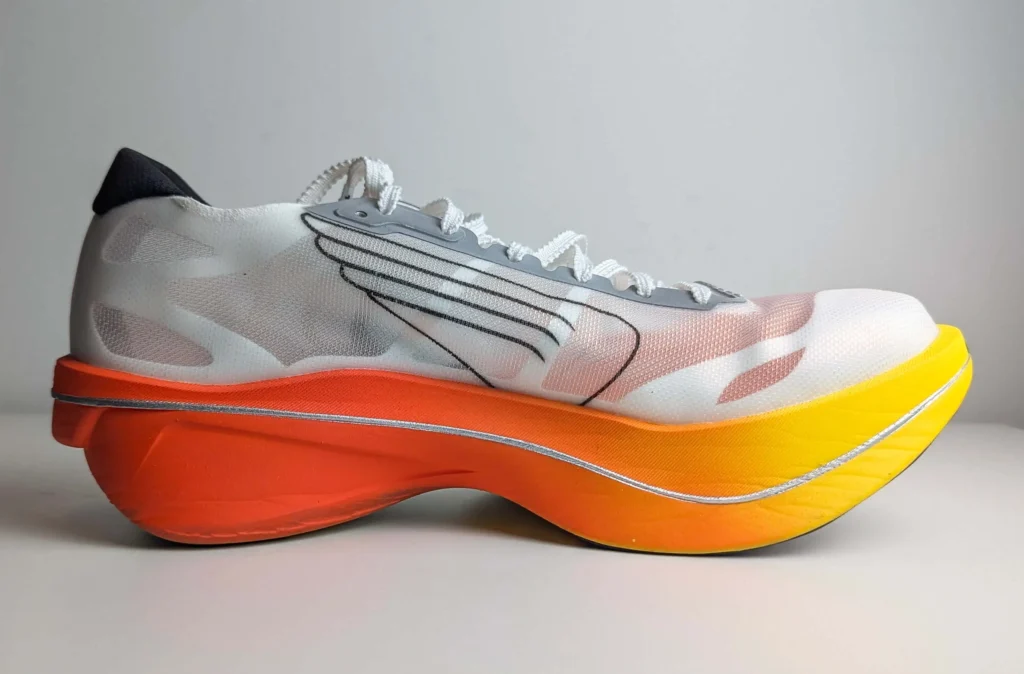
Pick the shoe up and it looks like it is going to force you onto your toes. There is a deep cut-out through the midfoot, scalloping on the medial and lateral sides, a hollowed-out heel, an extended forefoot and a pronounced late-stage rocker. Every visual cue says uncompromising.
It does not run that way. The best thing I can say about the plate is that most of the time I forgot it was there. Some carbon racers effectively dictate your footstrike — they move your foot into a position and you either agree or you fight them for the whole race. This one lets you run how you run. The propulsion arrives through the transition and toe-off, it builds as speed builds, and it feels like the plate, the foam and the rocker are working as a single system rather than three components arguing.
I did feel the plate underfoot in the first 5 minutes of my first run, particularly through the forefoot. That sensation faded as the foam broke in, and it never became the sort of localised hotspot that ruins the back half of a long effort. If you are sensitive to plate feel, know that it is present here in a way it is not in the softest, most insulated racers.
Stability is respectable for a 40mm platform this light. The heel is wide enough to land on and the forefoot is broad. The heel has been carved out to save weight, and there is not a lot of foam back there. Runners who sit heavily on their heels late in a marathon will feel that absence.
SPDWeave upper, fit and sizing
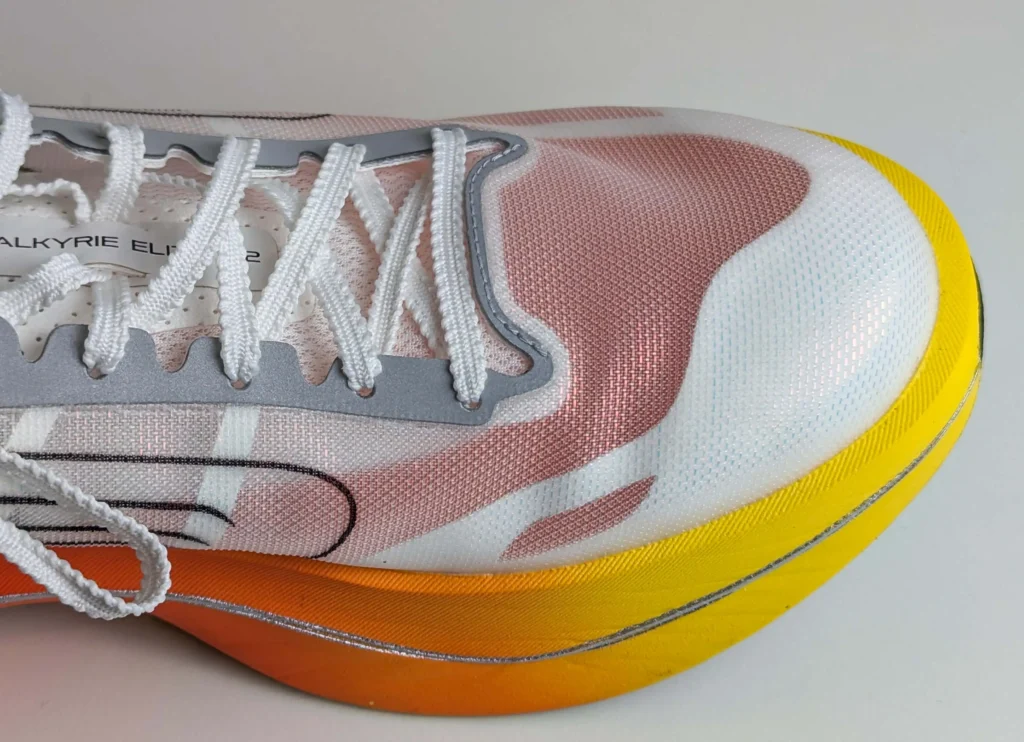
The upper is the other half of the weight story. SPDWeave is a translucent engineered mesh with a faint iridescent sheen running through it, and in the white colourway it is genuinely one of the better-looking race shoes on the market right now. More importantly, there is almost nothing to it: a whisper-thin tongue, minimal padding, a small structural piece at the Achilles and serrated laces that hold their tension.
It locks the foot down well. Through corners and on faster reps I got no internal movement, which is what you want and is not a given on an upper this stripped back.
Sizing: this is the section to read twice
The Valkyrie Elite 2 is a lean shoe. The midfoot in particular is narrow, and the toe box is snug rather than anatomical despite the pointed silhouette. I tested my usual US9 men size and found it true to size:
Narrow to average feet, low volume: stay true to size.
Average width but higher volume through the midfoot: you will need to run the laces loose across the whole forefoot to get in comfortably. Half a size up is the safer call.
Wide feet: this probably is not your shoe. There is no wide fitting, and the upper has no give in it.
One niggle worth flagging: the heel collar sits high and firm, and on longer runs it can nag at the Achilles. It settled for me after ~13 miles, but if you are prone to that irritation, try them on before committing.
Outsole and durability
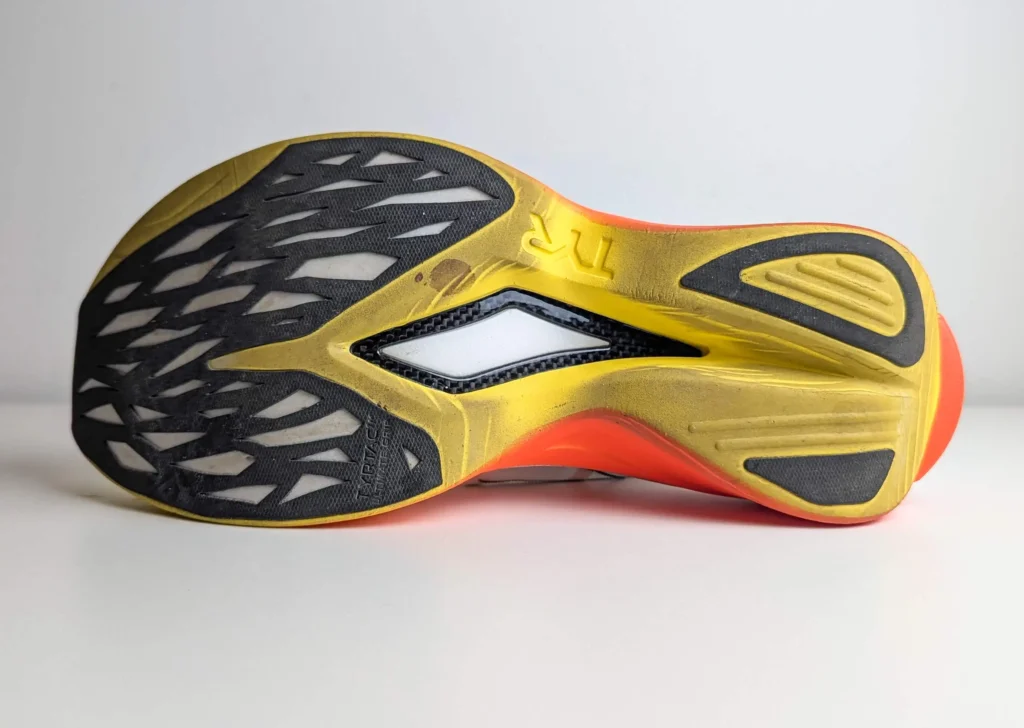
This is where the shoe quietly outperforms its category. Race shoes at this weight usually make their sacrifice at the outsole — a few scattered rubber pods, exposed foam everywhere else, and a chunk of that rubber peeling off inside 30 miles. The Valkyrie Elite 2 carries a properly thick layer of rubber across the forefoot, which is where a runner at race pace is spending their time.
Grip has been good on dry tarmac, painted road markings and damp pavement. I have had no confidence issues cornering hard.
The heel is nearly bare, which is deliberate and is part of how the weight got so low. After 30 miles in them, I don’t see any wear & tear. Long-term durability on a shoe this light is always the open question, and I will update this review as the mileage builds. Realistically, plan for a race-day and key-session shoe rather than a rotation workhorse.
How it compares to the other top racing shoes
vs. the class-leading aggressive racers (Puma Fast-R Nitro Elite 3, Asics Metaspeed Ray)
The Valkyrie Elite 2 sits somewhere between the two. It has the visual aggression and the decoupled geometry of the most extreme racers, but the ride feel is closer to the light-and-natural end of the spectrum. It is more forgiving than the most aggressive options at slower paces, and it does not load the calves the same way. At true top-end speed I would still expect the category leaders to give you the last fraction of a second, but the gap is small enough to be a matter of preference rather than performance.
vs. the Saucony Endorphin Elite lineage
There is a strong family resemblance to the original Endorphin Elite in the midfoot cut-out, the rear bevel and even the iridescent upper. The difference is that the foam here is considerably softer and more modern. If you liked the idea of that shoe but found it too firm and too demanding, this is close to what it should have evolved into.
On price
$280 is a lot, and it is a lot from a brand that is still building credibility on the road. But it undercuts the $300 flagships by $20 and delivers most of what they deliver. Judged on what is in the box rather than what is on the logo, it is fairly priced.
Who should buy the TYR Valkyrie Elite 2
Buy it if you race between 5K and the half marathon, you are chasing a personal best, you have a neutral to narrow foot, and you value low weight and natural propulsion over maximum bounce. It is also an outstanding shoe for threshold and race-pace sessions, which is where a lot of runners now spend their super shoe budget.
Look elsewhere if you have wide feet, you are a heavy heel striker targeting a marathon over roughly four hours, or you want one shoe that can double as a daily trainer. This is a specialist, and it is unapologetic about it.
Final verdict
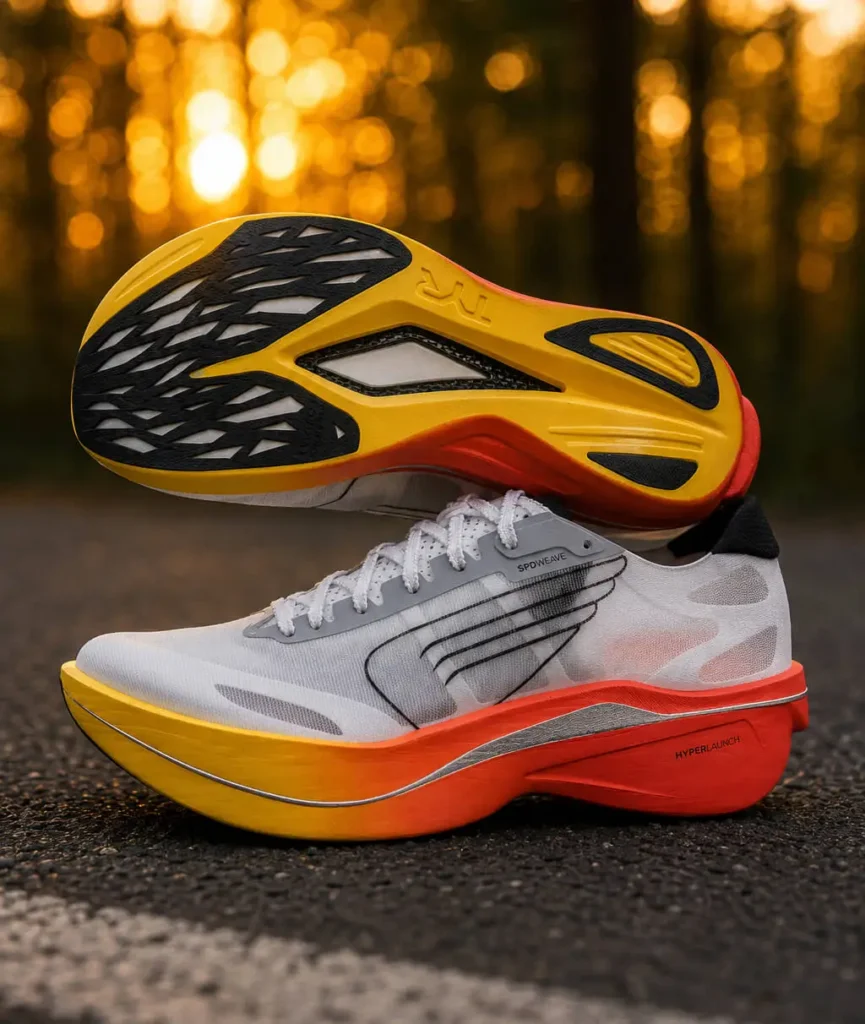
TYR has done something harder than making a light shoe. It has made a light shoe that is pleasant to run in. The Valkyrie Elite 2 threads a needle that most of this category misses: it is fast enough to belong in the same conversation as the flagship racers, and forgiving enough that you are not gambling your race on everything going right.
It is not the shoe that will give you the absolute last second at 5:20 pace, and it is not the shoe I would hand a four-hour marathoner. But for the runner who wants the lightest possible platform without paying for it in comfort, this is one of the most interesting racers released this year — and easily the most surprising.
Additional frequently asked questions
How much does the TYR Valkyrie Elite 2 weigh?
Around 150g (5.3oz) in a men’s US 9. Independent weigh-ins land between 150g and 156g in that size, with larger sizes running up toward 165g. That makes it one of the lightest 40mm carbon-plated racers currently available.
What is the stack height and drop?
40mm at the heel and 34mm at the forefoot, giving a 6mm drop.
Does the TYR Valkyrie Elite 2 run true to size?
It runs snug. Narrow and low-volume feet can stay true to size. If you have an average-to-wide forefoot or a high-volume midfoot, go half a size up. There is no wide fitting.
Is it a good marathon shoe?
It can be, for efficient midfoot and forefoot strikers. The heel is heavily cut away to save weight, so heel strikers and runners spending four hours or more on their feet will likely want something with more rear-foot protection. The half marathon is its sweet spot.
How much does it cost?
$280 USD, which places it $20 below the current flagship racers from the major brands.
What foam does TYR use?
Hyperlaunch, a 100% supercritical A-TPU foam. TYR claims 90% energy return and 50% more cushioning than the previous generation. It is a soft-leaning super foam that becomes more responsive the harder you run.
Is it better than the original Valkyrie Elite Carbon?
It is not comparable. The original weighed around 240g and used older midsole technology. The second version is roughly 90g lighter with a completely new foam, geometry and upper. If the first version put you off the brand, this is a different shoe entirely.
How durable is the outsole?
Forefoot rubber coverage is unusually generous for a shoe this light, and it has held up well so far. The heel is nearly bare foam, so treat this as a race-day and key-session shoe rather than a high-mileage trainer.

Prateek is the founder of Athletico, a Toronto-based running community of over 90,000+ running enthusiasts. A lifelong running gear nerd, Prateek has been testing and reviewing running shoes since 2021, with a focus on honest, real-world performance rather than marketing hype.
With 20+ 10K races, four half marathons, and 2 full marathons, Prateek brings both experience and curiosity to every review. From daily trainers to race-day shoes, each product is tested on the road, track, and long runs because the best insights come from miles, not spec sheets.
Through in-depth reviews and practical buying guides, Prateek helps runners make smarter choices about their gear, train with confidence, and enjoy the process of running a little more.